Shop Catagories
00

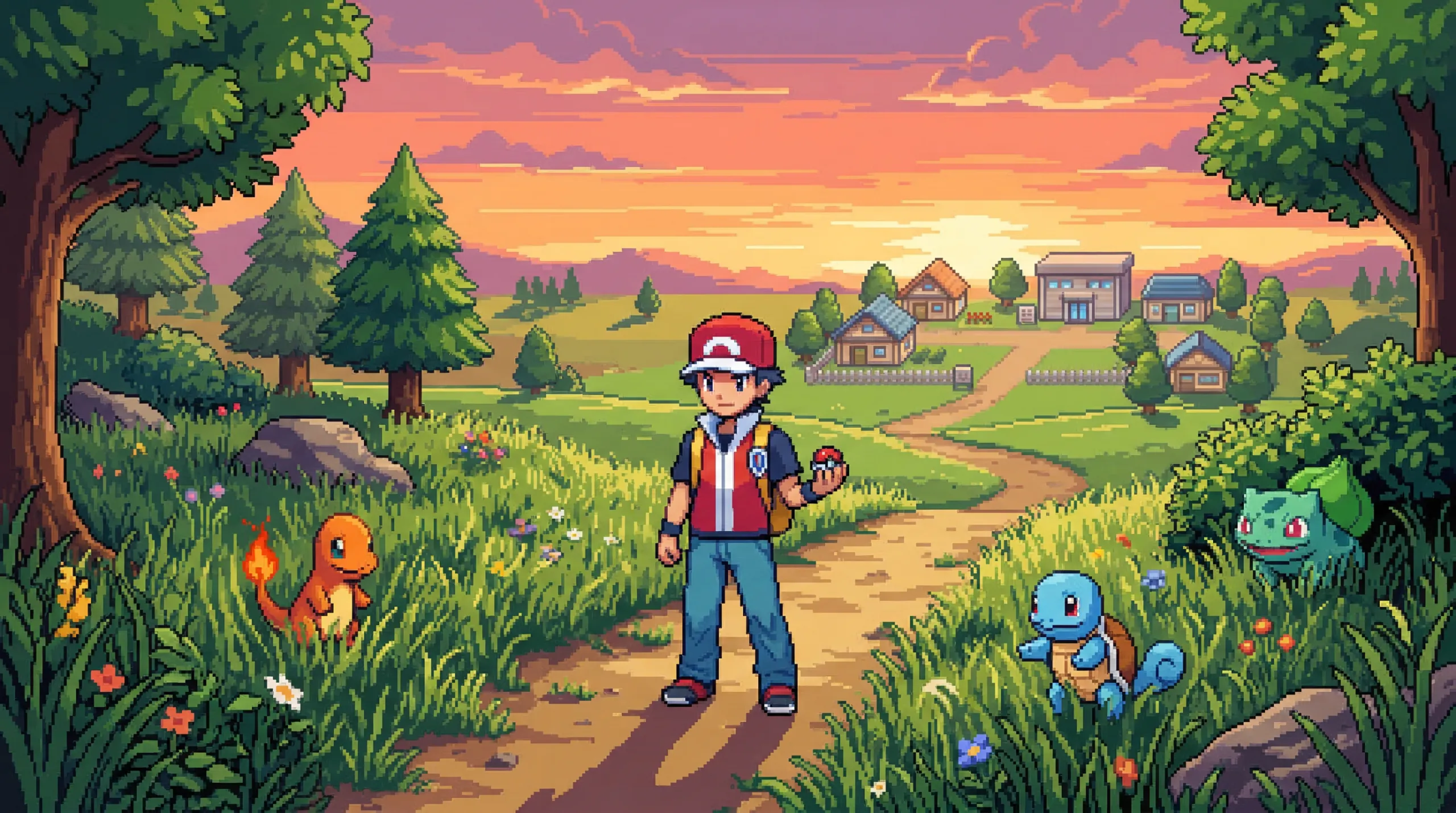
Few games in history have had the cultural seismic impact of Pokémon Red Version. Released in Japan in 1996 and internationally from 1998 onwards, Game Freak’s monster-collecting RPG did not merely become a successful video game — it created a global phenomenon that encompassed trading cards, an animated series, films, merchandise, and over two decades of sequel games. Going back to the original Game Boy cartridge today is a fascinating experience: the essence of everything Pokémon is compressed into a 1-megabyte black cartridge, and it remains genuinely playable and engaging after all these years.
You play as a young trainer leaving your hometown of Pallet Town with a starter Pokémon chosen from Bulbasaur, Charmander, or Squirtle. Your goals: complete the Pokédex by catching all 151 Pokémon, defeat the eight Gym Leaders and the Elite Four, and become the Pokémon Champion. Along the way, you clash repeatedly with rival Blue and dismantle the criminal Team Rocket organisation. The story is simple but emotionally effective — the relationship between trainer and Pokémon provides the series’ heart.
The turn-based battle system is elegant in its simplicity — each Pokémon has up to four moves, each with limited PP, and battles come down to type matchups, stat differences, and strategic move selection. The brilliance lies in the depth hidden beneath that simplicity: 151 Pokémon, each with unique stat profiles, move pools, and type combinations, generate enormous strategic variety.
Version exclusives — Pokémon available only in Red (like Arcanine and Electabuzz) — require trading with Blue Version players to complete the Pokédex. This social mechanic was revolutionary, turning the schoolyard into a marketplace and encouraging genuine cooperation between players.
Defeating each Gym Leader awards a Badge that unlocks new abilities and lets you command higher-level Pokémon. Hidden Machines like Surf and Fly are used both in battle and to traverse the overworld, creating an interconnected map that rewards backtracking as your team grows stronger.
The final gauntlet — four consecutive battles against the Elite Four followed by the Champion — is a genuine test of team building and preparation. The sudden revelation that your rival has already claimed the Championship title before you is one of gaming’s great narrative surprises.
The original Game Boy’s monochrome display gives Pokémon Red a timeless quality. Sprites are chunky but characterful, and the overworld design is clear and navigable. The soundtrack, composed by Junichi Masuda, is one of gaming’s finest — the Pallet Town theme, Lavender Town, and the battle music are instantly recognisable to millions worldwide.
Pokémon Red and Blue are among the best-selling Game Boy games of all time and among the most culturally impactful video games ever made. They defined an era, created careers, and launched one of the highest-grossing media franchises in human history. The original cartridge is a genuine artefact of gaming history.
Pokémon Red Version is where it all started, and it holds up remarkably well. The core design is brilliant, the world is charming, and the sense of adventure is undiminished. Whether this is a nostalgic return or your first encounter, you owe it to yourself to experience the original.
To view the product page for Pokémon Red Version please click here