Shop Catagories
00

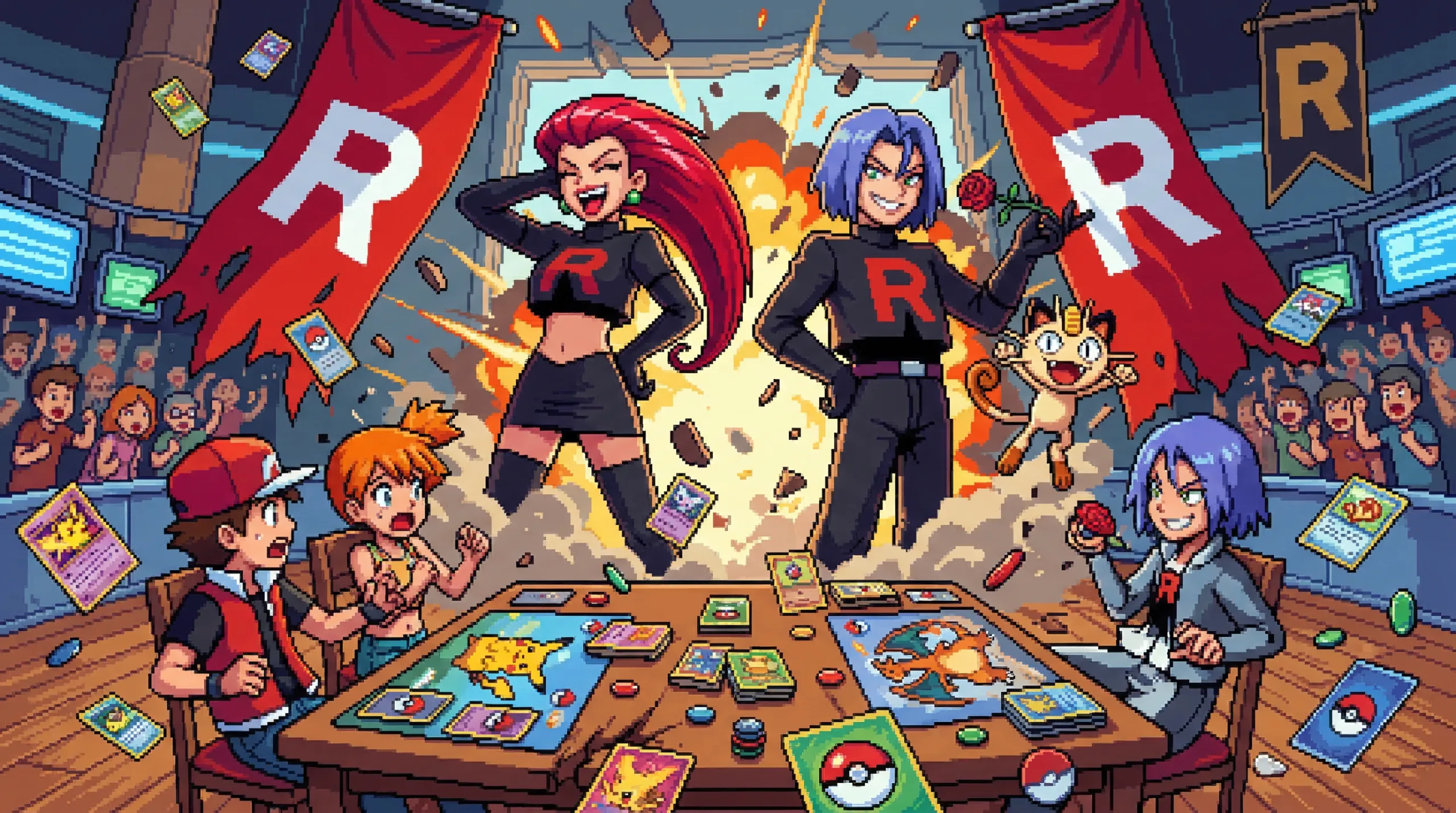
Pokémon Trading Card Game 2: Here Comes Team Rocket! is one of the most sought-after titles in the Game Boy Color library — not merely because of its quality, which is substantial, but because it was never officially released outside Japan. Developed by Hudson Soft and published by Nintendo in 2001, it followed up the surprisingly excellent first Pokémon Trading Card Game game with expanded content, new card sets, and Team Rocket as the central antagonists. Western fans who knew the original game and longed for a sequel had to turn to fan translations to experience it — which only enhanced its legendary status in retro gaming communities.
The story picks up after the events of the first game. Mark — the player character — has become the Grand Master of the Card Game Club, but peace is short-lived: Team Rocket has invaded the island and seized all eight Club Dojo buildings, establishing their own card clubs in each. Mark must battle his way through Team Rocket’s operatives, defeat their Gym Leaders, and ultimately confront the organisation’s leadership to reclaim the island. The narrative is a natural escalation from the first game, and Team Rocket’s presence as antagonists gives the story a more urgent and cohesive dramatic arc.
The game is a digital implementation of the Pokémon Trading Card Game as it existed in the early 2000s, including cards from the Base Set, Jungle, Fossil, Team Rocket, and Gym sets. Players build decks, manage energy resources, and battle opponents using the full ruleset of the physical card game, faithfully reproduced. The AI is improved over the first game and provides a genuine challenge to players who know the card game well.
TCG 2 includes cards from significantly more sets than its predecessor, including the Team Rocket expansion — featuring Dark Pokémon with alternative move sets — and the Gym Heroes and Gym Challenge sets featuring cards based on the Gym Leaders. This expanded card pool dramatically increases deck-building possibilities and strategic depth.
The deck construction interface is refined over the first game, with better sorting and filtering options that make managing your collection and building optimised decks more intuitive. For players who invest time in understanding the card synergies, assembling a powerful deck is genuinely satisfying.
Replacing the Club structure of the first game, the Dojo system sends players through eight Team Rocket-controlled buildings, each with a theme — fire, water, lightning — mirroring the Gym structure of the main Pokémon games. This familiar structure gives the campaign a satisfying sense of progression.
TCG 2 uses the Game Boy Color hardware to display card art in vivid colour — a significant visual upgrade over the muted tones of the first game. Card illustrations are sharp and recognisable, and the interface is clean and well-designed. The soundtrack is upbeat and varied, with distinct themes for each Dojo that give the game’s world a strong musical identity.
The Japan-exclusive status of TCG 2 has made it one of the most discussed unreleased games in Western Pokémon history. Fan translations have allowed English-speaking players to experience it, and those who have consistently praise it as superior to the first game. Its legacy is partly that of the road not taken — a reminder of how much content never made it out of Japan during the franchise’s peak era.
Pokémon Trading Card Game 2: Here Comes Team Rocket! is an excellent game in its own right and a fascinating piece of Pokémon history. For fans of the card game, the GBC library, or Pokémon history in general, it is an unmissable experience — and one that a great many collectors have never had the opportunity to own.
To view the product page for Pokemon Trading Card Game 2 please click here