Shop Catagories
00

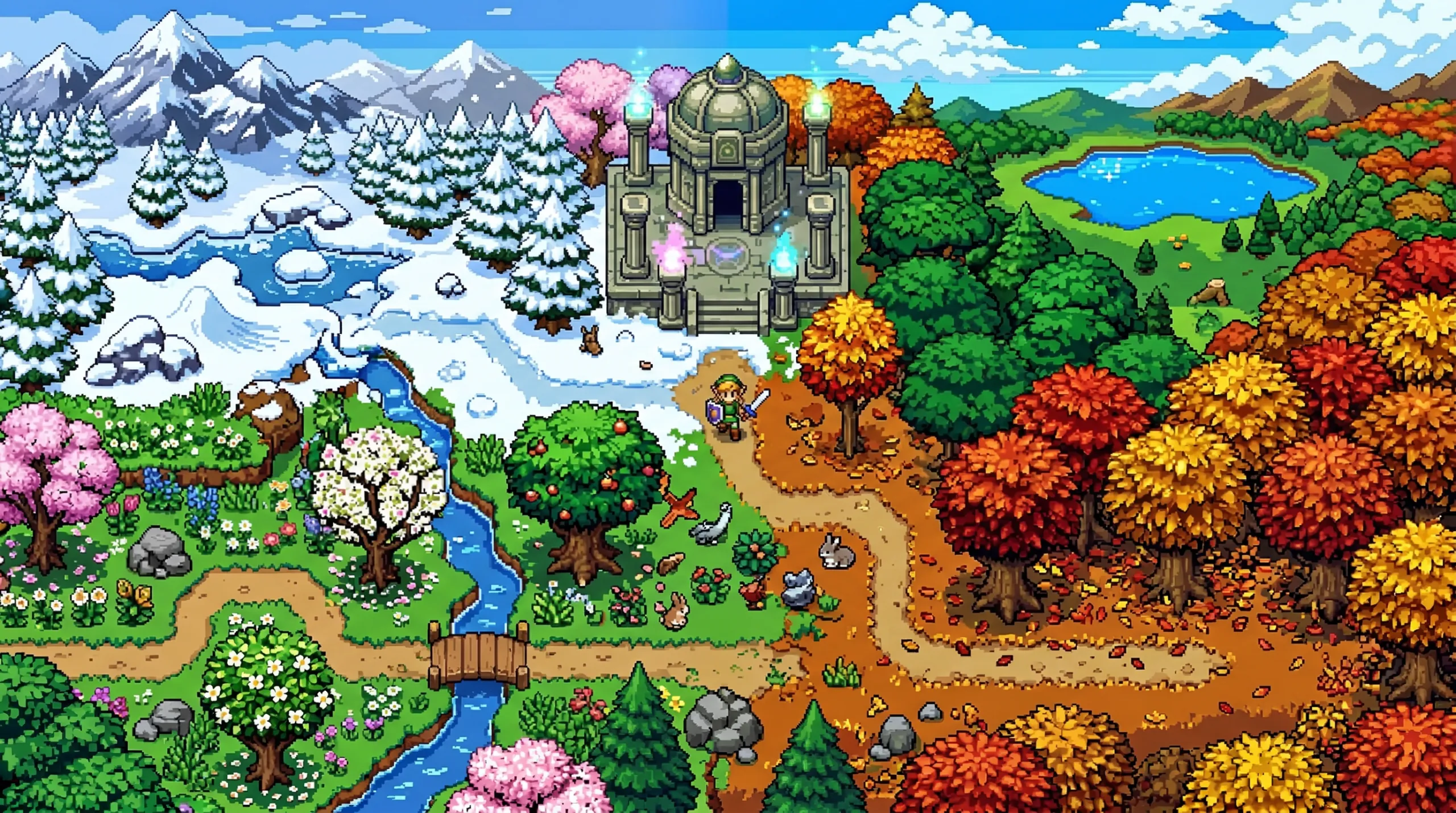
The Legend of Zelda: Oracle of Seasons arrived alongside its sister title Oracle of Ages in 2001, the two games forming an interconnected GBC duology that stands as one of Nintendo and Capcom’s finest collaborative achievements. Where Oracle of Ages challenged players with deep puzzle-solving, Oracle of Seasons leaned into action-focused dungeon combat and dynamic world exploration — making the pair a beautifully complementary experience. As the more accessible of the two, Oracle of Seasons is often the recommended entry point into the duology.
Link is transported to the land of Holodrum, where the evil general Onox has kidnapped Din, the Oracle of Seasons, and buried the Temple of Seasons underground, throwing the natural world into chaos. Without Din’s power, the seasons of Holodrum shift randomly and violently. Link must recover the eight Essences of Nature and confront Onox before the land withers entirely. Memorable supporting characters include the travelling performer Din herself, the animal friends of the hidden forest, and the enigmatic General Onox — one of the more physically imposing bosses in the GBC Zelda canon.
The action in Oracle of Seasons is the sharpest in any GBC Zelda title. Combat is crisp and responsive, dungeons are cleverly designed, and the overworld hides secrets at every turn. The game’s defining feature is the Rod of Seasons, a magical staff that allows Link to change the current season at will once the ability is unlocked.
The Rod of Seasons transforms Holodrum’s landscape dramatically. Winter snowfall creates elevated pathways across previously impassable terrain; spring blossoms reveal hidden passages; autumn wind can push objects; summer dries out ponds and lakes. Mastering seasonal manipulation is the key to accessing new areas and solving the overworld’s many puzzles.
Early in the game, players encounter one of three animal companions — Ricky the Kangaroo, Dimitri the Dodongo, or Moosh the Bear — depending on their actions. These companions provide unique traversal abilities, and their availability is partially random, encouraging repeat playthroughs to see all three.
Like its partner title, Oracle of Seasons supports a password-based linked game system. Completing both games unlocks an extended epilogue with a true final boss encounter, making the duology feel like one cohesive epic adventure when played together.
The seasonal visual transformations are Oracle of Seasons‘ greatest visual achievement — watching a lush green forest become a snow-covered wonderland with the press of a button is genuinely impressive for GBC hardware. The art direction is lively and colourful throughout, and the music delivers some memorable overworld and dungeon themes that rank among the best in the portable Zelda catalogue.
Both Oracle titles were critically acclaimed upon release and have only grown in reputation over time. Oracle of Seasons in particular is celebrated for its intuitive, action-focused approach to Zelda design — a game that proved Capcom had genuinely understood what makes the series great and delivered something worthy of the franchise name.
Oracle of Seasons is a must-own for any Game Boy Color collection. Its dynamic season-shifting mechanic, tight combat, and beautiful world design make it endlessly enjoyable — and even better when paired with Oracle of Ages for the complete linked adventure.
To view the product page for Oracle of Seasons please click here