Shop Catagories
00

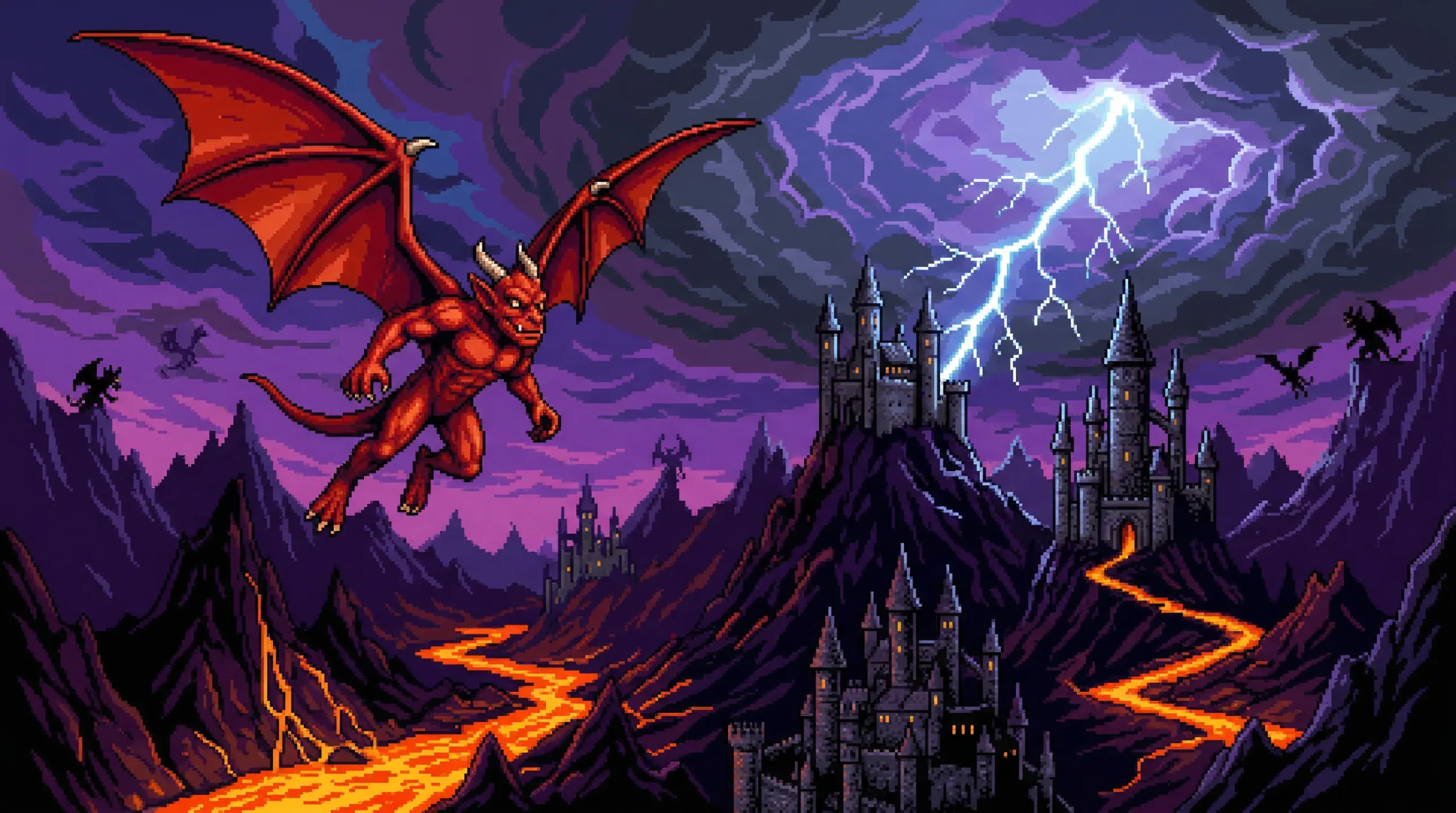
Capcom’s Gargoyle’s Quest series occupies a fascinating niche in retro gaming history — a spin-off from the Ghosts ‘n Goblins franchise that invited players to see the world through the eyes of the enemy. The original Gargoyle’s Quest (1990) was a Game Boy exclusive that combined RPG overworld navigation with action platformer combat, following the young gargoyle Firebrand on his heroic quest. The sequel, Gargoyle’s Quest II: The Demon Darkness, expanded the concept significantly, delivering one of the most ambitious action-RPGs in Capcom’s early handheld catalogue.
Firebrand — the Red Blaze, a gargoyle warrior — must rise to defend the Ghoul Realm against the forces of the Demon Darkness, an evil that threatens to consume both the demon world and the human realm beyond. The story is richer and more developed than a typical action game of its era, with NPCs, world-building dialogue, and a genuine sense of escalating threat that gives the adventure emotional weight. Supporting characters across the Ghoul Realm help Firebrand develop his abilities and understand the nature of the darkness he faces.
The game blends a top-down RPG overworld with side-scrolling action stages — a structure that gives it both exploratory depth and visceral gameplay satisfaction.
Firebrand can fly, cling to walls, breathe fire, and use special vials that provide additional combat capabilities. As the game progresses, his wings upgrade to allow longer flight, and new fire attacks become available, each with different properties suited to different enemy types.
Between action stages, players navigate an overworld map, visit towns, speak to demons, collect items, and receive upgrades. This structure gives the game a sense of scale and narrative progression unusual for a handheld action title of 1992.
The platforming stages carry the demanding difficulty of the Ghosts ‘n Goblins lineage — precise controls, pattern-memorisation boss fights, and genuine consequences for careless play. Mastering Firebrand’s movement and attack options is essential to survival.
The game presents an impressively gothic visual palette for Game Boy hardware, with detailed sprite work for Firebrand and his adversaries and atmospheric stage environments ranging from lava fields to haunted fortresses. The soundtrack is widely praised as exceptional for the platform — brooding, memorable compositions that enhance every stage’s atmosphere.
The Gargoyle’s Quest series is frequently cited by retro gaming enthusiasts as one of Capcom’s most underappreciated franchises. Firebrand went on to appear in the NES sequel and the SNES’s Demon’s Crest, but the original Game Boy entries remain among the most accessible entry points. The combination of RPG depth and action platformer quality established a template that influenced numerous later handheld action-RPGs.
Gargoyle’s Quest II: The Demon Darkness is one of the most ambitious and rewarding games in the classic Game Boy library. Its blend of action and RPG elements, strong narrative, and exceptional music make it essential for fans of either genre. If you have not encountered Firebrand’s quest before, this is an ideal place to start.
To view the product page for Gargoyle’s Quest 2: The Demon Darkness please click here