Shop Catagories
00

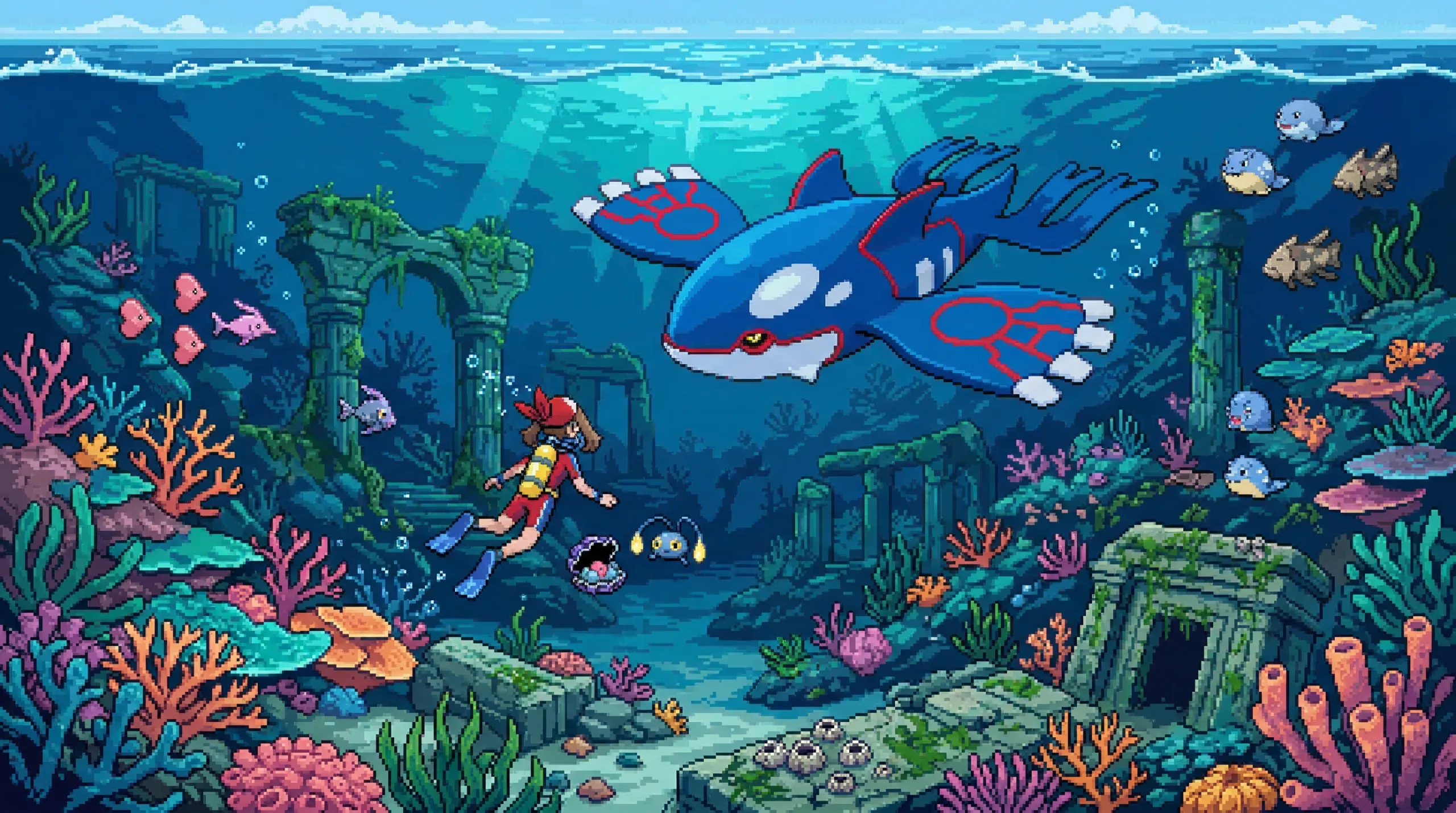
When Pokémon Sapphire launched alongside Ruby in November 2002 in Japan and 2003 internationally, it marked the Pokémon franchise’s arrival on the Game Boy Advance — and what an arrival it was. The Hoenn region, with its vast oceanic expanses, humid rainforests, and volcanic peaks, was unlike anything the series had attempted before. Sapphire specifically leaned into Hoenn’s aquatic identity, with Team Aqua as the primary antagonist and the legendary sea beast Kyogre at the centre of its climactic conflict. For players who had grown up with Kanto and Johto, Hoenn felt genuinely exotic and adventurous.
In Pokémon Sapphire, your trainer arrives in Littleroot Town and sets out on the classic gym-to-league journey — but the story is framed around the machinations of Team Aqua, a group of extremists who believe expanding the world’s oceans will benefit Pokémon kind. Their pursuit of the ancient legendary Pokémon Kyogre, capable of summoning endless rain and flood, provides the central dramatic tension. The game’s Professor, Birch, is more action-oriented than his predecessors, encountered in the field rather than a lab. Your rival, Brendan or May depending on your chosen gender, is notably more good-natured than previous rivals.
Pokémon Sapphire introduced several mechanical innovations that would become series staples. Pokémon Contests offered a non-battle competition system focused on a Pokémon’s attributes like Coolness and Cuteness, providing a creative alternative to the main game’s combat focus. The Double Battle format debuted here, adding tactical depth by allowing two Pokémon to fight simultaneously. Abilities were also introduced as a new layer of passive battle strategy.
The Contest Hall system was a genuinely novel addition, rewarding players for developing Pokémon through Poffin-making and stat cultivation rather than pure battling. It demonstrated that Game Freak could expand the franchise’s appeal beyond combat, and this system was refined and expanded in later games.
The introduction of Abilities — passive traits unique to Pokémon species that activate in battle — transformed the competitive landscape. Abilities like Intimidate, Levitate, and Speed Boost added enormous strategic variety and became one of the franchise’s most enduring mechanical additions.
Secret Bases allowed players to decorate their own hidden rooms carved into trees, cliffs, or bushes across Hoenn. Shareable with friends via link cable, they were a charming social feature that captured the imagination of players worldwide and contributed to Hoenn’s lasting popularity.
Pokémon Sapphire was a visual showcase for the Game Boy Advance on release. Hoenn’s diverse biomes — from the Route 119 downpours to the crystal-clear waters of Sootopolis City — were rendered in vivid colour with carefully designed tile sets. The soundtrack, composed by Go Ichinose and Morikazu Aoki, features some of the most evocative music in the series, with Route 120 and the legendary battle themes being particular fan favourites.
Pokémon Sapphire, alongside Ruby, sold over 16 million copies worldwide, cementing the franchise’s continued dominance into the GBA era. Its mechanical innovations — Abilities, Contests, Double Battles, Secret Bases — shaped the series for a decade. The Hoenn region’s passionate fan base eventually led to the 2014 remakes Omega Ruby and Alpha Sapphire, a testament to the originals’ enduring affection.
Pokémon Sapphire remains a wonderfully crafted adventure that captures the spirit of exploration and discovery at the heart of the franchise. Its lush world, innovative mechanics, and memorable legendary encounter make it a standout title in the Game Boy Advance library and essential for any retro collector.
To view the product page for Pokemon Sapphire please click here