Shop Catagories
00

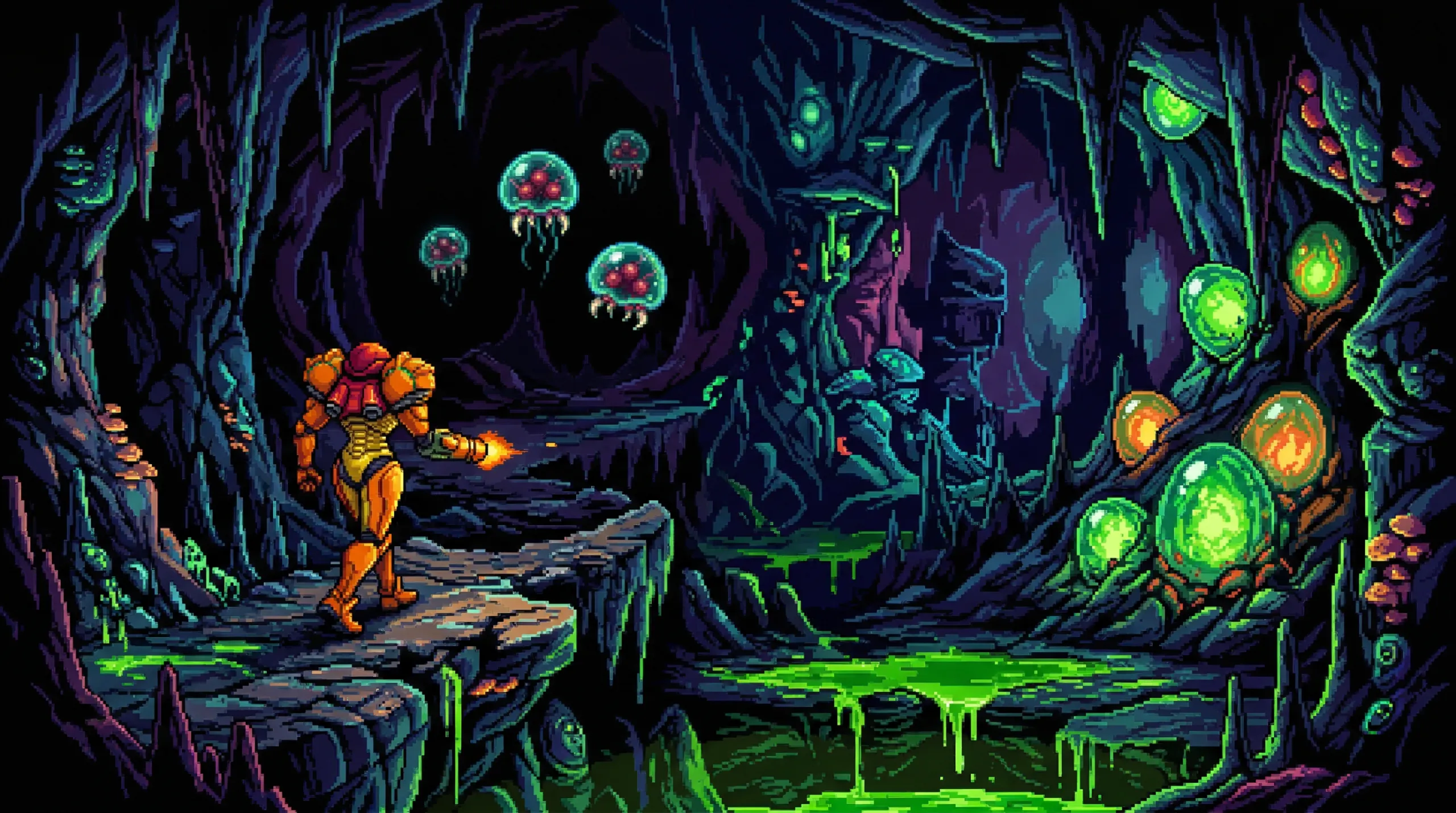
Metroid II: Return of Samus is one of the most significant entries in the Metroid series, but for many years it languished in relative obscurity — locked to the original Game Boy’s monochrome display. Metroid II DX is a fan-made colour restoration hack that breathes vibrant new life into this 1991 classic, adding a full colour palette to the Game Boy Color hardware. For the first time, SR388’s subterranean tunnels look properly alien and foreboding. Whether you are revisiting this adventure or diving in fresh, Metroid II DX is the definitive way to experience one of gaming’s most atmospheric exploration titles.
Bounty hunter Samus Aran is dispatched to the Metroid homeworld, SR388, with a single objective: exterminate every last Metroid on the planet before the Space Pirates can weaponise them. The story strips the series back to basics — it is Samus alone against an entire ecosystem of hostile alien lifeforms. As she descends deeper into the planet’s cavern system, she discovers the Metroids’ life cycle, encountering new and increasingly dangerous forms of the parasitic creatures. The game ends with a haunting twist that would set the stage for Super Metroid on the SNES.
Metroid II pioneered the now-iconic Metroidvania structure on Game Boy hardware. Samus explores a vast interconnected cave system, finding new power-ups that unlock previously inaccessible areas. The game uses a clever counter system — seismic activity fills certain tunnels until you defeat a set number of Metroids, then subsides to reveal new passages. This provides a satisfying sense of progress without requiring a map.
Classic Metroid power-ups make their appearance — the Spring Ball, Space Jump, and the legendary Varia Suit — alongside several new additions. Each acquisition fundamentally changes how Samus moves through the world, rewarding exploration with tangible improvements to mobility and firepower.
Unlike the original game where all Metroids look the same, Metroid II introduces multiple evolutionary forms — Alpha, Gamma, Zeta, and Omega — each requiring different tactics to defeat. This escalating challenge keeps the combat fresh across the entire 10-hour adventure.
The DX hack applies a thoughtfully designed colour palette that makes each biome of SR388 visually distinct. Lava zones glow orange, underground lakes shimmer blue-green, and the Metroid Queen’s lair is draped in ominous purples and reds — giving the game an entirely new dimension.
The original Metroid II was already impressive on the stock Game Boy — its large, detailed sprites and atmospheric cave environments pushed the hardware noticeably. The DX colour version elevates this considerably. The music, composed by Ryoji Yoshitomi, is some of the eeriest and most effective on the platform: sparse, alien melodies that amplify the isolation of SR388’s depths.
Metroid II established many series staples and directly set up the events of Super Metroid, arguably one of the greatest games ever made. It remained stubbornly absent from Nintendo’s Virtual Console for years, which made the DX colour hack a beloved staple of the fan community. Nintendo eventually released an official 3DS remake, Metroid: Samus Returns, in 2017, which is a testament to how important this title is to the franchise’s DNA.
Metroid II DX is an essential experience for fans of atmospheric exploration games and Metroid lore. The colour enhancements make it the best way to play a game that was ahead of its time, and the core adventure holds up beautifully. Solo, atmospheric, and thrillingly designed — this is Game Boy at its finest.
To view the product page for Metroid II DX please click here