Shop Catagories
00

On 27 February 1996, a small Japanese game company released two Game Boy cartridges that would change the entertainment landscape forever. Pokémon Red Version — or Pocket Monsters Red in Japan — was the flagship title of a new franchise conceived by Satoshi Tajiri and Ken Sugimori, inspired by Tajiri’s childhood passion for collecting insects. What Tajiri created was a game that transformed the solitary experience of RPG exploration into a social phenomenon built on trading, battling, and the simple, irresistible drive to catch them all. Decades on, the Red cartridge remains one of the most significant objects in gaming history.
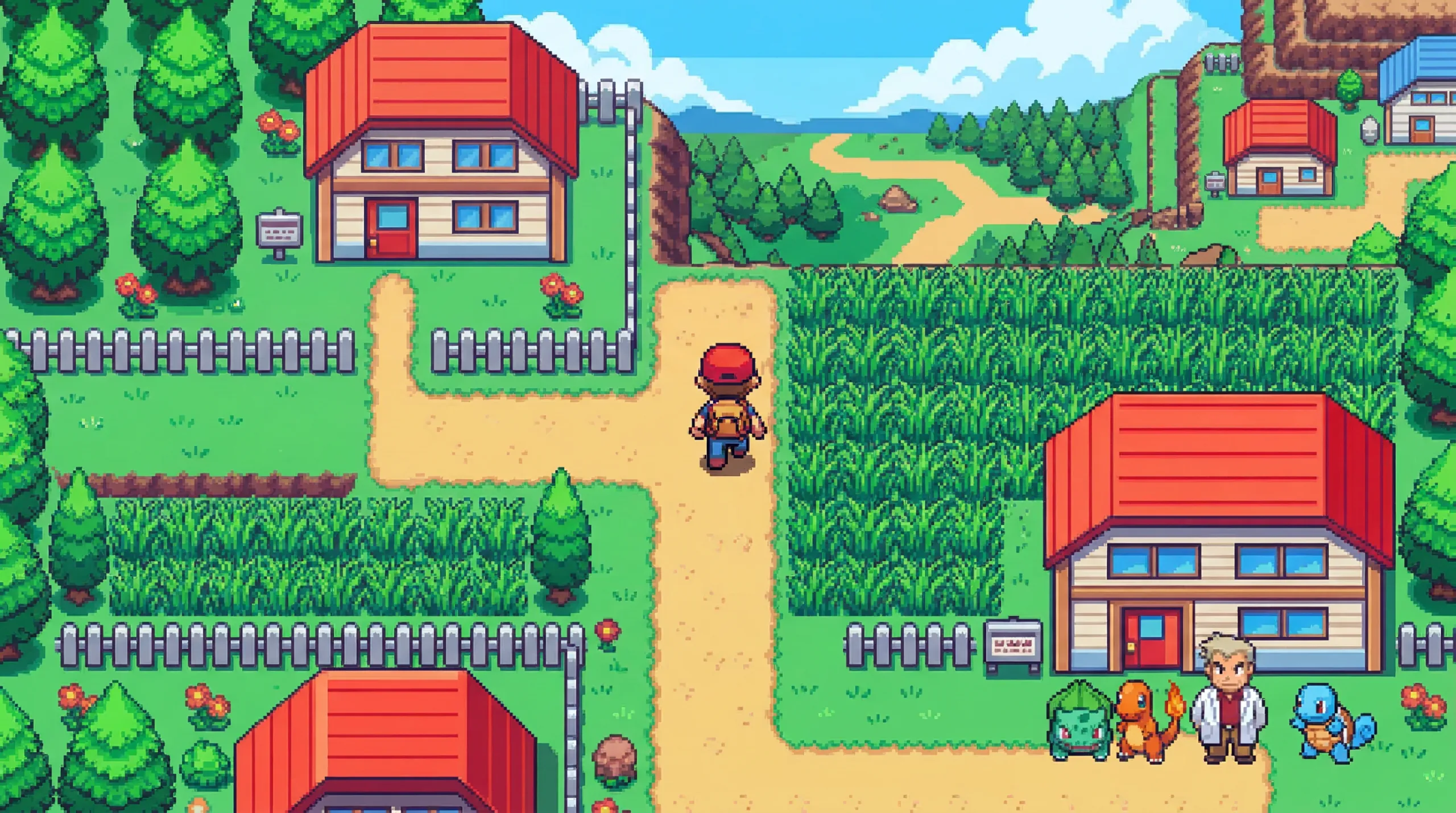
You are a nameable young trainer from Pallet Town, about to receive your first Pokémon from the local professor, Oak. Your choices are Bulbasaur, Charmander, or Squirtle — and that choice, made in the first five minutes of the game, has defined friendships, rivalries, and playground debates for thirty years. Your journey takes you across Kanto, a region of eight towns and the routes that connect them, on a quest to defeat eight Gym Leaders and the Elite Four while dismantling the criminal ambitions of Team Rocket. Your rival — reckless, confident, infuriating — challenges you at every significant milestone, giving the adventure a personal competitive edge.
Pokémon Red’s genius lies in the intersection of three interlocking systems: the RPG progression of levelling and evolving Pokémon, the tactical battle system built on type advantages and move selection, and the social element of trading and competing with other players. Each system is simple enough to grasp quickly and deep enough to sustain years of engagement.
Pokémon Red’s type system — fifteen elemental types with a matrix of effectiveness relationships — was the game’s primary strategic engine. Fire beats Grass, Water beats Fire, Electric beats Water: these relationships cascade into a vast web of tactical decision-making that rewards knowledge and punishes complacency. The type system established in Red remains the foundation of every Pokémon game made since.
The goal of completing the Pokédex — obtaining all 151 Pokémon — was the overarching aspiration that unified the game’s otherwise episodic structure. Some Pokémon required trading with someone who owned the Blue version. This design decision made Pokémon into a social game at a fundamental level, and the Pokédex completion drive is one of gaming’s earliest and most successful implementations of the collectible completionist loop.
Pokémon Red is full of secrets — hidden items, rare Pokémon in unexpected locations, and the legendary Mew obtainable through a famous glitch that Nintendo never fully patched. These discoveries, passed between players as playground legend, created a shared mythology around the game that deepened the sense of wonder.
The monochrome Game Boy presentation of Pokémon Red is a masterclass in clear, legible sprite design. Kanto’s towns, dungeons, and routes are distinct and expressive within the hardware’s limitations. Junichi Masuda’s soundtrack is remarkable — each town has its own theme that captures its personality, and the battle music is charged with exactly the right level of urgency. The haunting Lavender Town theme became so notorious it spawned internet legends of its own.
Pokémon Red launched the highest-grossing media franchise in history. It sold over 11 million copies in its original run, sparked an anime, a trading card game, merchandise lines, and a cultural moment that defined the late 1990s globally. Its influence on game design — particularly in how it demonstrated the power of social mechanics and collectible loops — is incalculable.
Pokémon Red Edition is irreplaceable — not as a museum piece, but as a living, playable game that holds up remarkably well after thirty years. Pick it up, choose your starter, and remember why this little Game Boy cartridge changed everything.
To view the product page for Pokemon Red Edition please click here