Shop Catagories
00

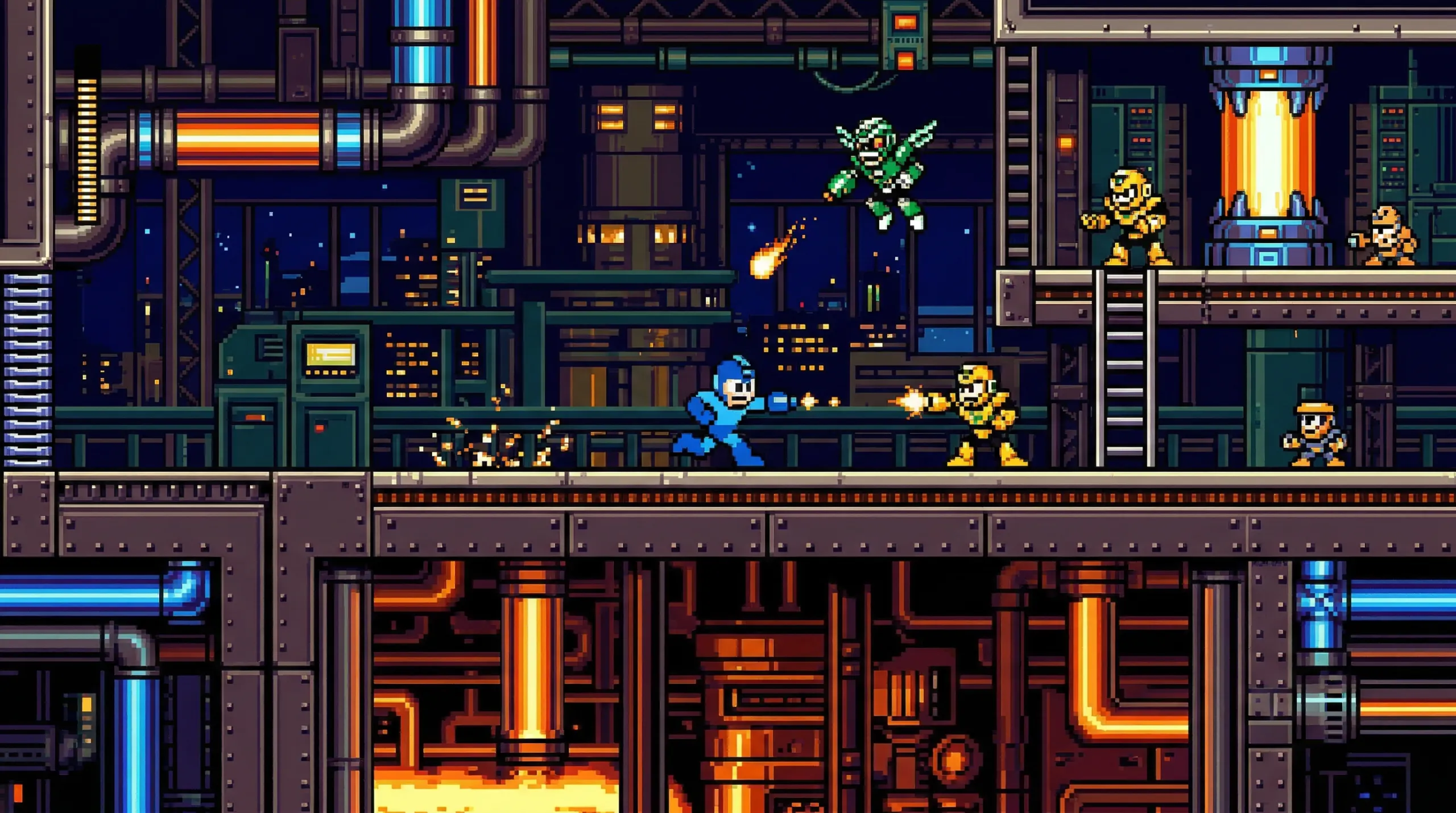
Mega Man 3 for the Game Boy, released in 1992, arrived at the height of the franchise’s golden era. Following the success of the first two Game Boy entries, Capcom and Minakuchi Engineering delivered a third handheld adventure that continued the tradition of combining the best of two NES robot master rosters with fresh stage designs and gameplay refinements. For Game Boy owners who could not get enough of the Blue Bomber’s relentless platforming action, this was exactly the kind of quality portable experience the handheld deserved.
The portable Mega Man 3 is an original game rather than a direct port of the NES title with the same name. It draws its Robot Masters from Mega Man III and Mega Man IV on NES, weaving them into a new adventure where Dr. Wily has once again constructed a fortress staffed with reprogrammed robots. Mega Man must defeat all eight Robot Masters to gain the weapons needed to penetrate the fortress and put an end to Wily’s latest scheme. The narrative is appropriately lean — the story is the stage, the weapon, the challenge ahead.
The formula is classic Mega Man — eight stages, eight bosses, one fortress, and the constant question of which weapon to use when. The Game Boy version adapts this formula beautifully for portable play, with stage lengths and difficulty tuned for handheld sessions.
Players choose from eight Robot Masters in any order, each with their own themed stage and attack pattern. Identifying the weakness chain and defeating them in the optimal order — using each absorbed weapon against the next boss — is a puzzle that rewards both knowledge and experimentation.
Rush, Mega Man’s loyal robotic companion, provides crucial support with his Coil, Marine, and Jet forms. Choosing when and how to deploy Rush is a key part of navigating the game’s more demanding passages efficiently.
Managing both weapon energy and health effectively is central to success in any Mega Man game. Energy tanks — extra health reserves collected in stages — are precious commodities that must be conserved for the toughest encounters.
The visual presentation is clean and functional, with Mega Man’s iconic design rendered clearly even on the original Game Boy’s screen. Stage environments are varied and communicate their themes effectively. The audio is a highlight — chiptune renditions of Mega Man music are among the best the Game Boy has to offer, with driving melodies that perfectly accompany the frantic on-screen action.
The Game Boy Mega Man series is a lesser-known but thoroughly respectable branch of one of gaming’s most beloved franchises. Mega Man 3 GB is a genuinely fun and well-made action-platformer that stands on its own merits, offering the essential Mega Man experience in pocket-sized form.
Tight controls, satisfying boss battles, and that irresistible weapon-stealing progression — Mega Man 3 on Game Boy delivers everything that makes the series great. A must-have for fans of classic action-platformers and essential for anyone building a comprehensive Game Boy library.
To view the product page for Mega Man 3 please click here