Shop Catagories
00

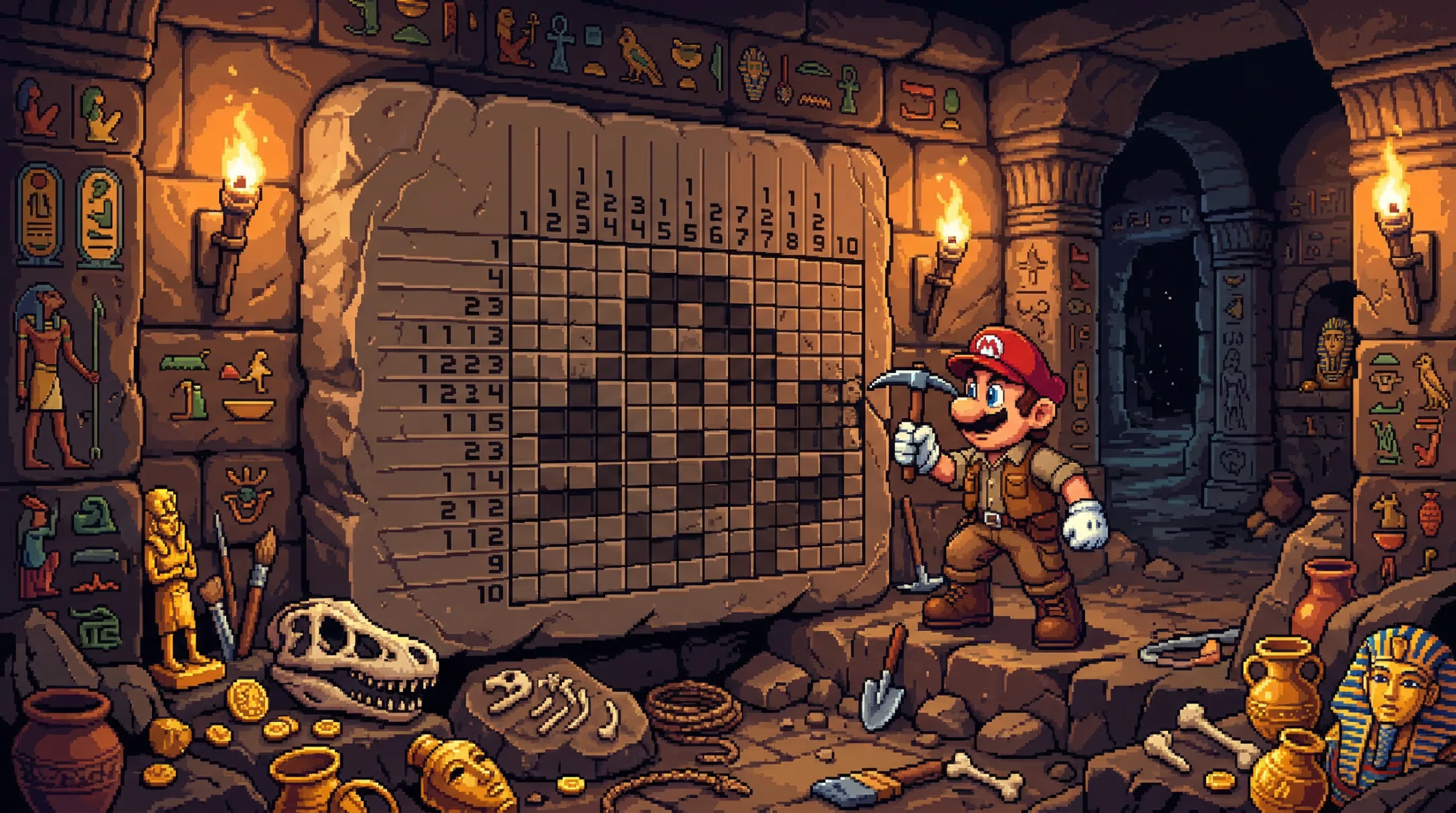
Picross — the art of revealing pixel pictures through logical deduction — is one of gaming’s most satisfying puzzle formats, and Mario’s Picross 2 (known as Mario no Picross 2 in Japan) is the definitive handheld expression of that art. Released in 1996 for the original Game Boy in Japan, this sequel expanded substantially on its predecessor with more puzzles, refined mechanics, and the same delightful archaeological framing that made the original memorable. It remains one of the purest puzzle games ever made for the platform.
Mario’s Picross 2 tasks players with solving nonogram puzzles — grid-based logic challenges where numbers along rows and columns indicate how many consecutive cells should be filled. The game frames this as Mario working as an archaeologist, chipping away at stone tablets to reveal the hidden image beneath. Solve the puzzle correctly and Mario cheers; make too many errors and the tablet cracks. The premise is charmingly absurd and perfectly suits the systematic nature of the puzzles.
The game features hundreds of puzzles arranged in escalating difficulty tiers. Early puzzles are small and approachable, teaching the core logic intuitively. Advanced puzzles can occupy enormous grids requiring deep chains of deductive reasoning — genuinely challenging without ever feeling unfair.
A distinctive feature of the sequel is the Kiite Picross (Listen Picross) mode, where audio cues provide hints rather than numbers. This mode fundamentally changes the puzzle-solving experience, requiring players to listen carefully and use sound as their primary clue — a remarkable design idea that remains unique to this title.
Completing puzzles without errors unlocks the full revealed picture in full detail. This optional challenge adds replayability and rewards mastery, encouraging players to revisit solved puzzles to achieve a perfect run.
Mario’s Picross 2 embraces the Game Boy’s monochrome aesthetic as a feature rather than a limitation — the greyscale grid presentation is clean, readable, and perfectly suited to the puzzle format. The interface is elegant and uncluttered. The music is light and pleasant, never distracting from the meditative concentration that the best picross sessions demand.
Mario’s Picross was a modest commercial success in Japan but was not widely released outside Asia, making both games relative rarities in Western markets. However, the series planted the seeds for Nintendo’s later Picross franchise — including the hugely successful Picross S series on Nintendo Switch — which is now one of the most beloved puzzle game franchises in the world. The Game Boy entries are the origin of that legacy.
Mario’s Picross 2 is pure, crystalline puzzle design — logical, rewarding, and endlessly satisfying. The Kiite Picross mode alone makes it worth tracking down, and the sheer volume of content on offer is remarkable for its era. An absolute must for puzzle game enthusiasts and a genuine classic of the Game Boy library.
To view the product page for Mario’s Picross 2 please click here