Shop Catagories
00

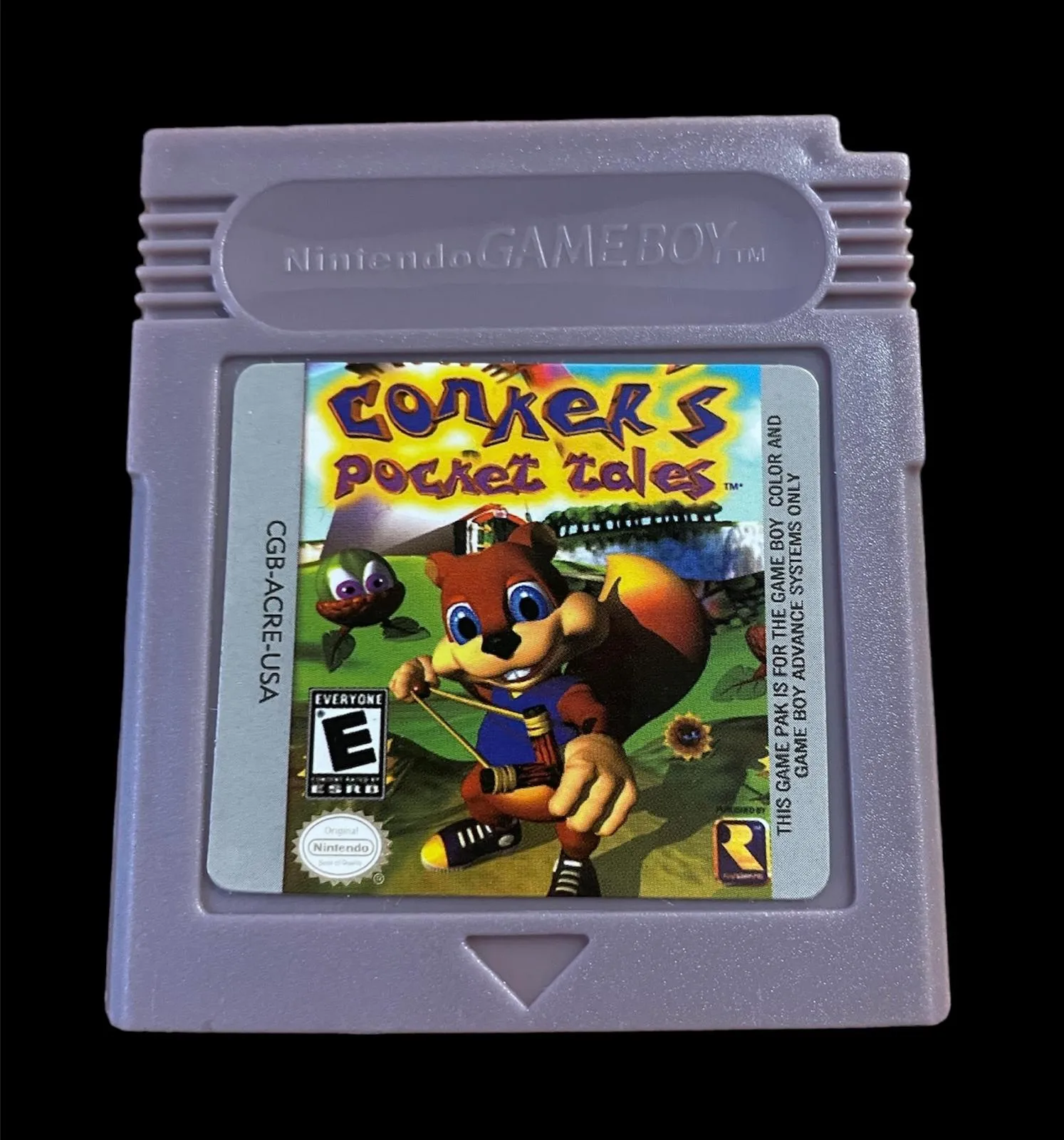
Conker's Pocket Tales is a 1999 action-adventure game developed and published by Rare for the Game Boy Color, and it holds the distinction of being the very first game to star Conker the Squirrel as the lead character. The story follows Conker as he hunts down his stolen birthday presents and rescues his girlfriend Berri from the dastardly Evil Acorn. Rare set out to create an experience in the spirit of The Legend of Zelda, delivering a top-down adventure filled with puzzles, exploration, and combat across a series of interconnected environments.
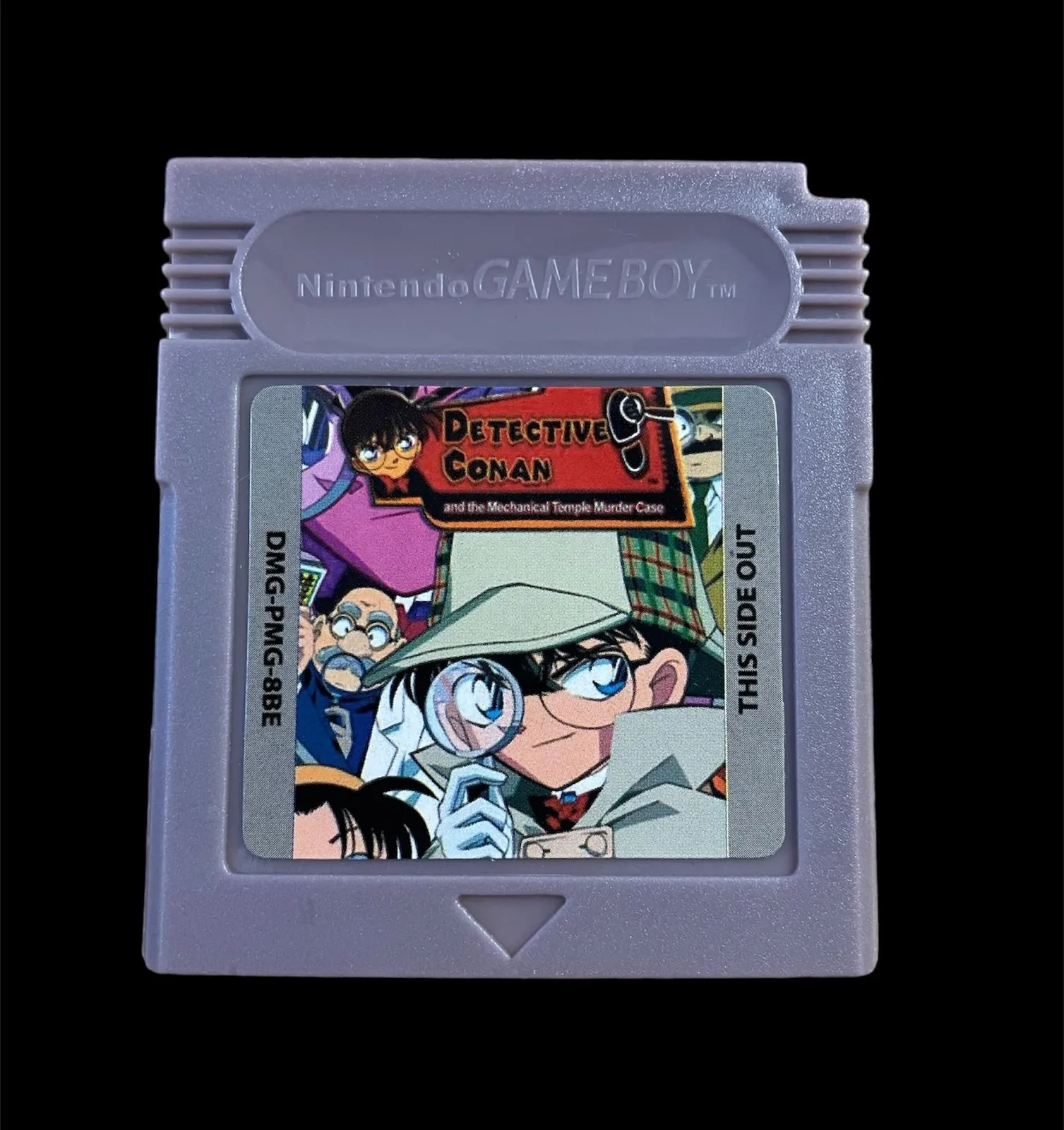
Detective Conan and the Mechanical Temple Murder Case is a Game Boy Color adventure game based on the massively popular Japanese manga and anime franchise created by Gosho Aoyama. Known in the West as Case Closed, Detective Conan follows the boy detective Conan Edogawa — secretly the teenage sleuth Shinichi Kudo, shrunk to a child's body by a mysterious organisation — as he solves crimes alongside characters including bumbling private detective Kogoro Mouri and fellow detective Heiji Hattori. This Game Boy Color entry captures the atmosphere of the TV series faithfully, presenting an original mystery involving a missing woman and the secrets of an ancient temple.
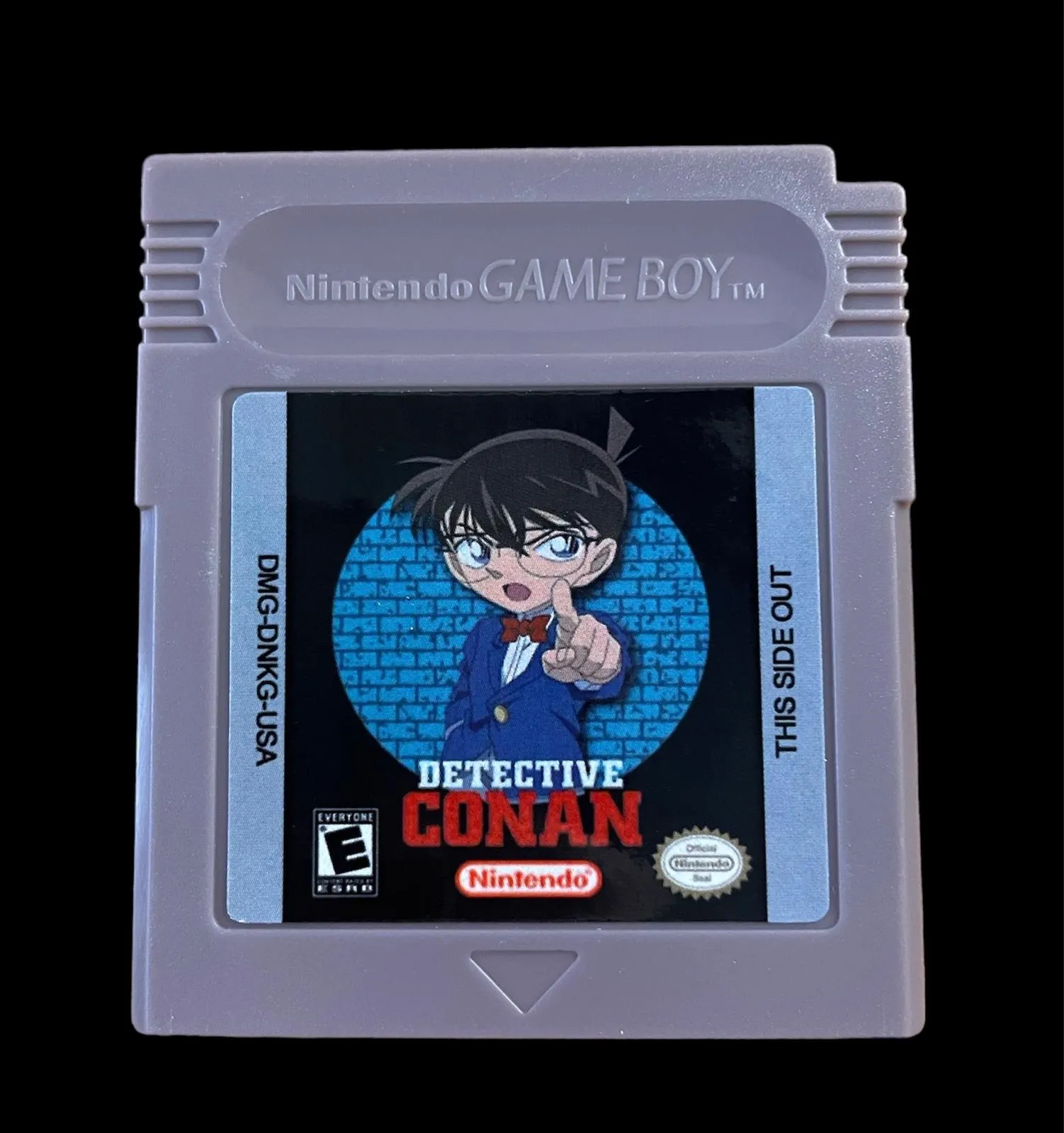
Detective Conan: The Mechanical Temple Murder Case is a Game Boy Color adventure game based on the enormously popular Japanese anime and manga franchise created by Gosho Aoyama in 1994. Known as Case Closed in some Western markets, Detective Conan follows Shinichi Kudo, a brilliant teenage detective who is forced to take an experimental poison by a criminal organisation and is transformed into a child. Taking on the alias Conan Edogawa, he continues to solve complex murder cases while searching for a way to restore his original form. The franchise has been a cultural phenomenon in Japan for decades, spawning hundreds of anime episodes, theatrical films and numerous video game adaptations — of which this Game Boy Color title is among the more intriguing.
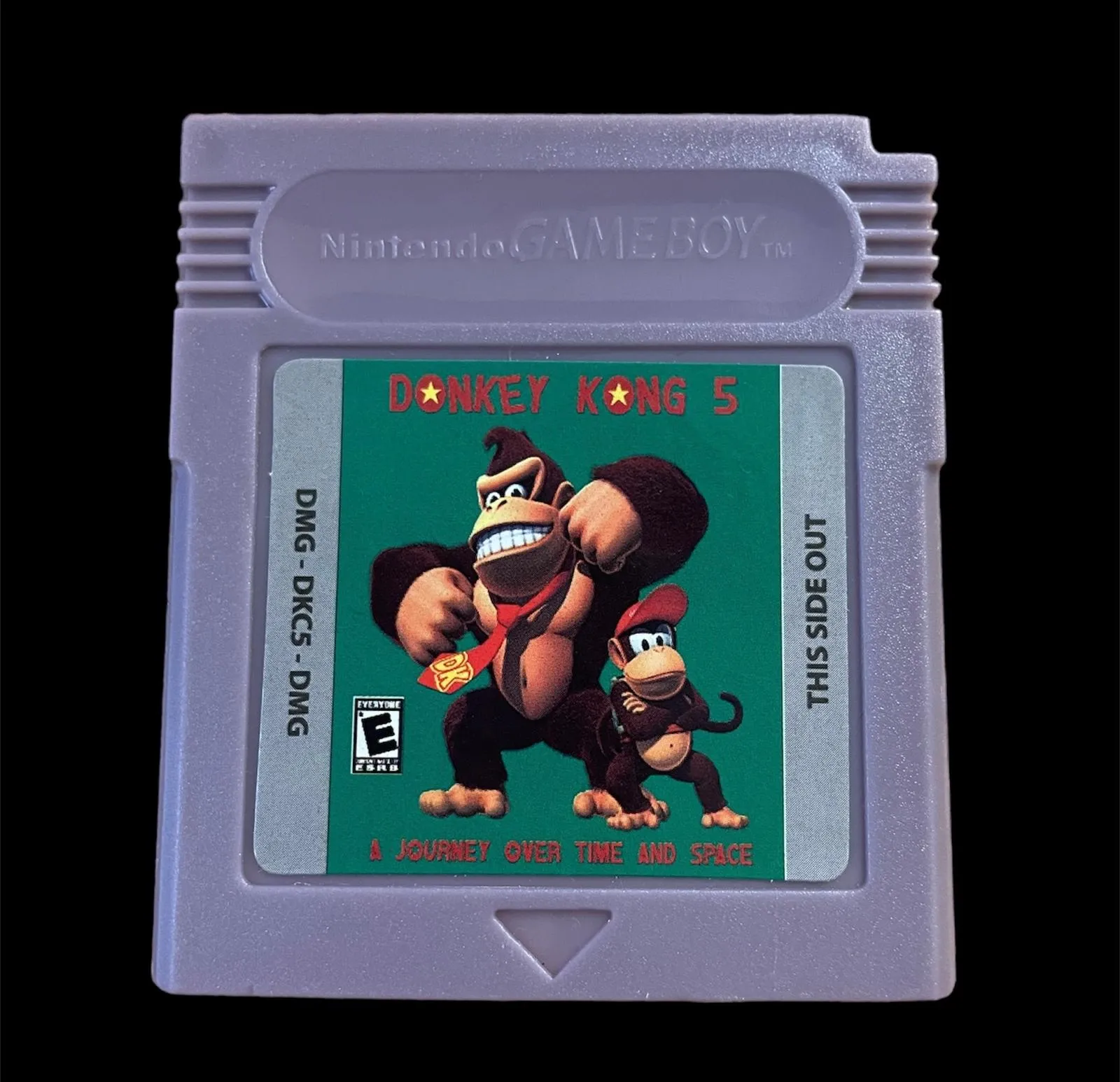
Donkey Kong 5: The Journey of Over Time and Space is a wildly unique entry in the world of unofficial Game Boy Color titles, produced by the Chinese developer Sintax. Set in a bizarre narrative where the evil Lombardo has kidnapped Sodoma, the fairy responsible for nurturing all of Earth's plants — leaving Donkey Kong without his beloved bananas — the game sends DK on a bizarre cross-dimensional rescue mission. It is a fascinating piece of handheld gaming history that blends familiar platform gameplay with some delightfully unexpected creative choices.
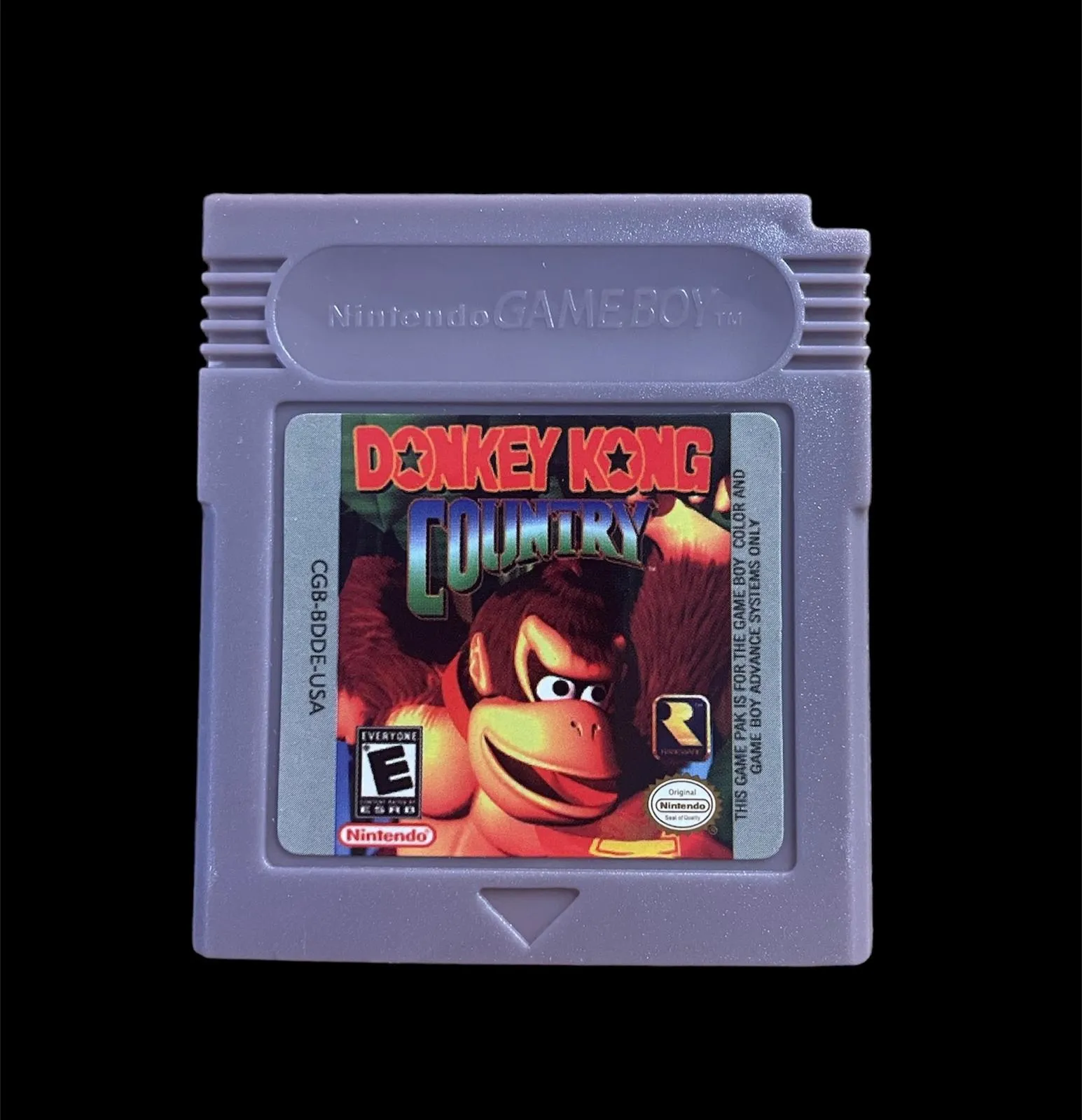
Donkey Kong Country for the Game Boy Color is Rare's impressive 2000 port of the legendary 1994 Super Nintendo classic, bringing King K. Rool, the stolen banana hoard, and all the platforming thrills of the original adventure to Nintendo's handheld in vibrant colour. Released in November 2000 in North America and Europe, the port was developed by Rare alongside their GBC version of Perfect Dark, and while it drew heavily on assets from the Donkey Kong Land games to fit within the hardware's constraints, the result is a faithful and entertaining portable adaptation of one of the SNES's most celebrated titles.
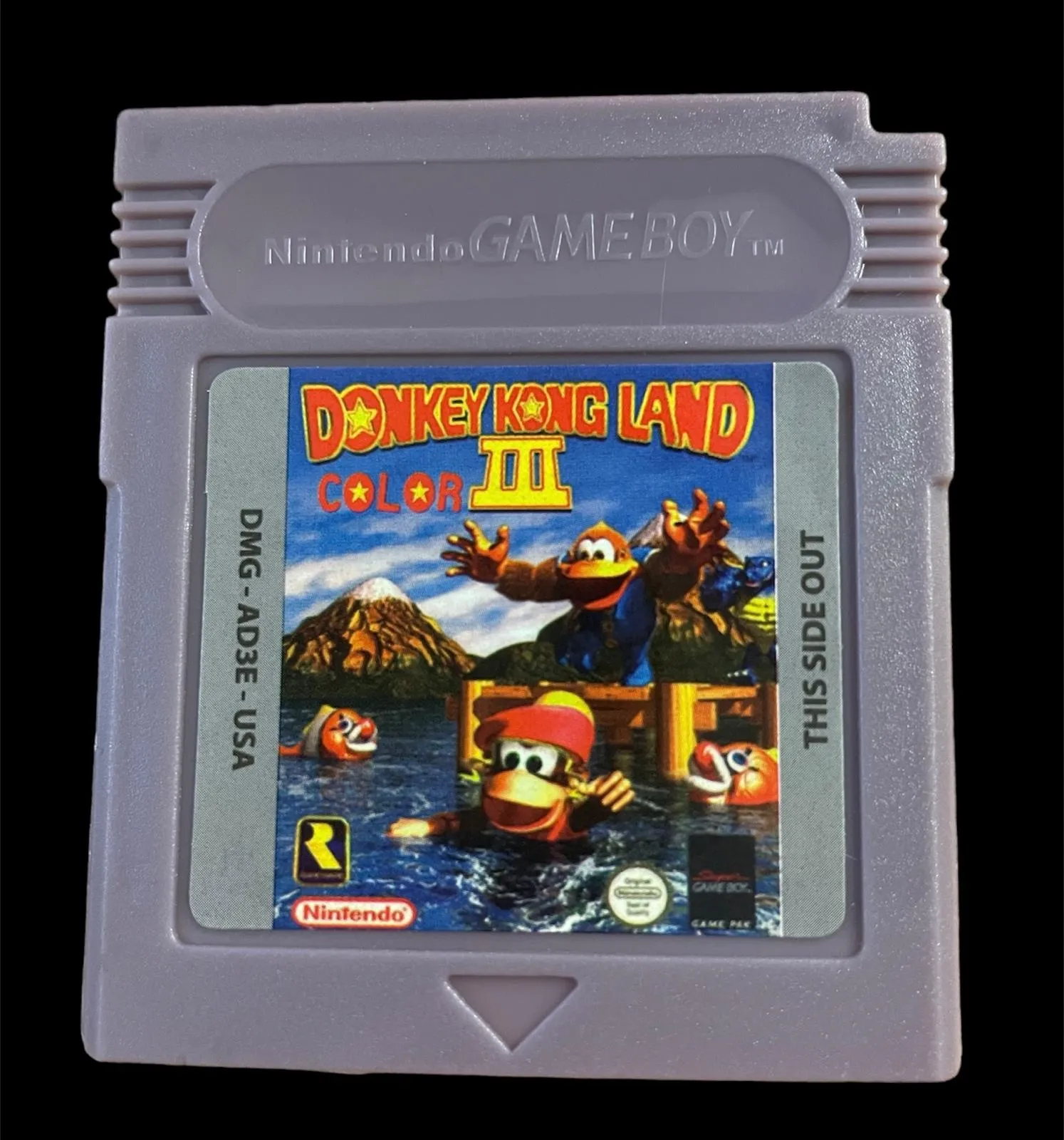
Donkey Kong Land 3 in its Game Boy Color edition — released in Japan in 2000 under the title Donkey Kong GB: Dinky Kong and Dixie Kong — is the enhanced colour version of Rare's 1997 Game Boy platformer. Donkey Kong Land III closely followed the events of Donkey Kong Country 3 on the SNES, with Dixie Kong and her young cousin Kiddy Kong competing in a contest to find the missing Donkey Kong and Diddy Kong while battling the K. Rool-aligned enemies across six distinctive worlds.
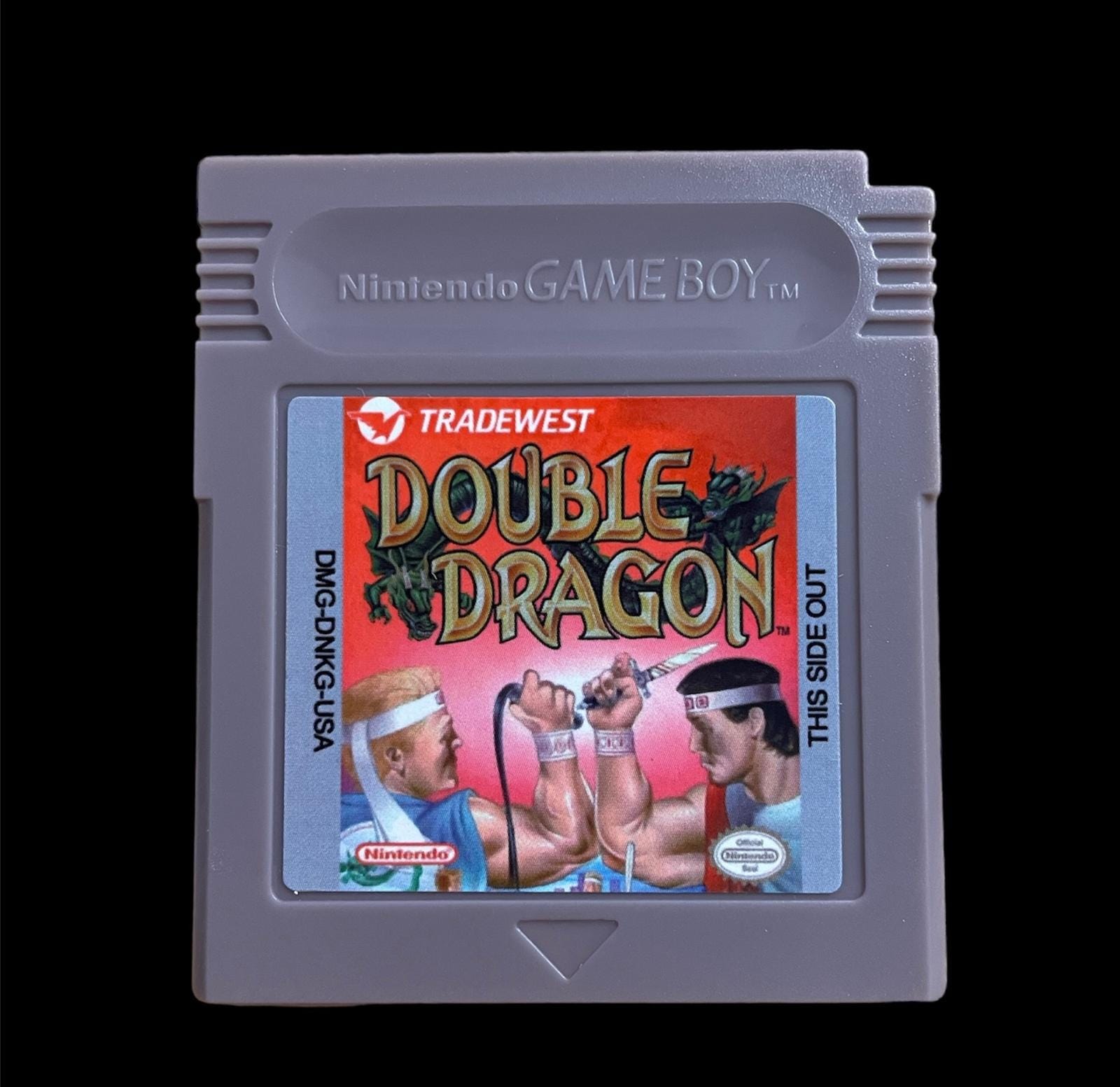
Double Dragon on the Game Boy is a remarkable piece of handheld gaming history, arriving in 1990 just a year after the original Game Boy's launch and bringing one of the defining beat-em-ups of the arcade and NES era to a pocket-sized screen. The game follows Billy Lee as he fights through the dangerous streets, factories, and hideouts of the Black Warriors gang to rescue Marian from the mysterious Shadow Boss — a storyline that became the blueprint for the scrolling beat-em-up genre. Developed by Technōs Japan, the same studio behind the original arcade game, the Game Boy version benefits from the developer's direct involvement, resulting in a port that captures the spirit of the NES version more faithfully than many competing handheld conversions of the period.
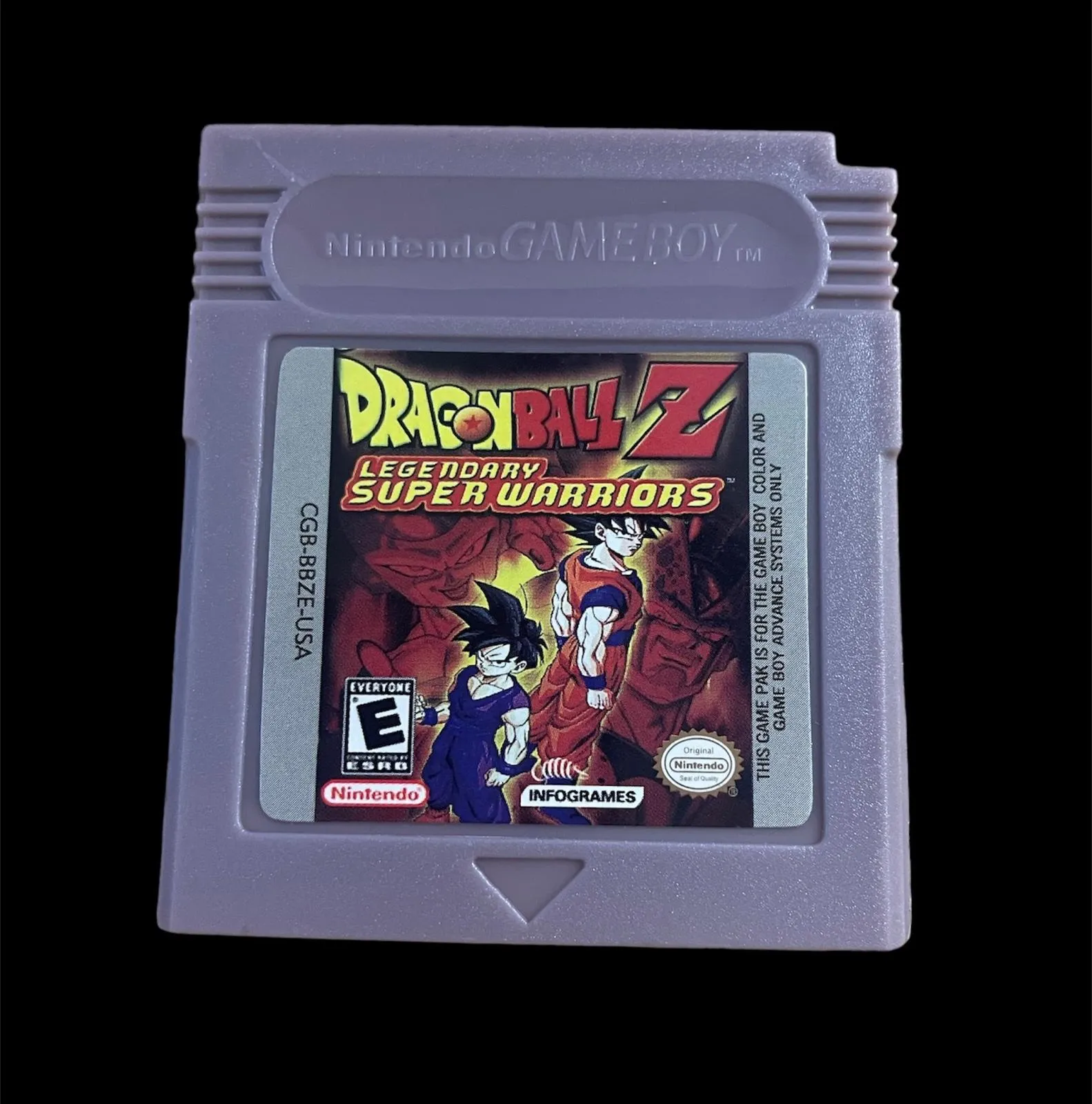
Dragon Ball Z: Legendary Super Warriors is a turn-based fighting game for the Game Boy Color developed by Banpresto and published by Bandai, released in Japan in 2002 and notable as one of the first officially licensed Dragon Ball Z games to reach North American shores. The game covers the entire Dragon Ball Z saga from the Saiyan Saga through to the Kid Buu Saga, plus two additional storylines exploring Future Trunks's alternate timeline — a total of 30 scenarios in Story Mode with two further unlockable battles. Rather than relying on reflexes, battles are fought using a card-based system: before each fight, players build a deck of attack cards, technique cards, and support items, then execute them strategically during combat. Defeating opponents earns card rewards, and the story unfolds between battles through character portraits and dialogue, faithfully recreating key moments from the anime.
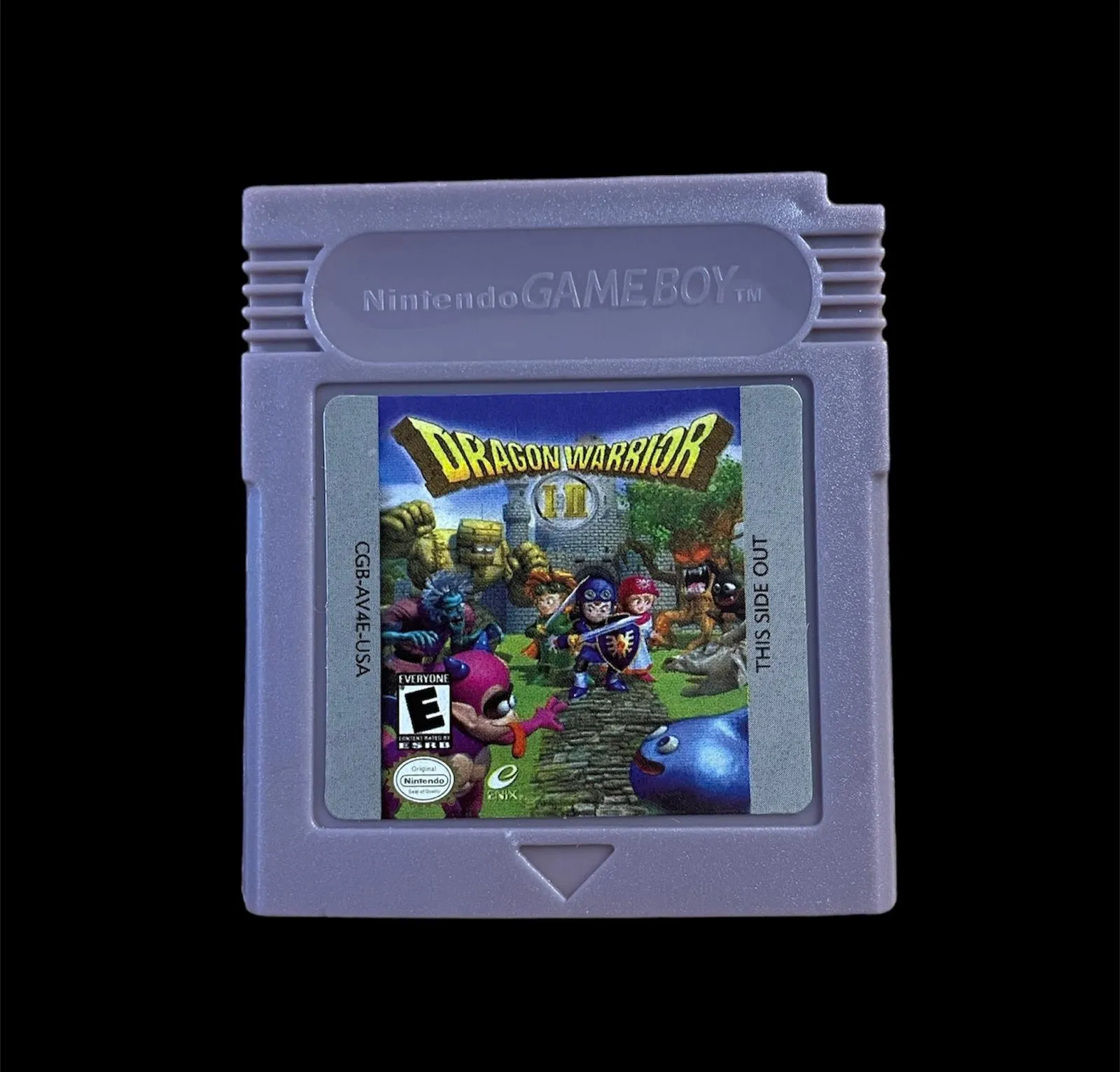
Dragon Warrior I and II for the Game Boy Color is a remarkable double-pack released in 1999 that brings together the first two entries in Enix's landmark Dragon Quest series — the games that effectively defined the Japanese RPG genre and laid the foundation for decades of role-playing game design. Originally released for the Famicom in 1986 and 1987, both titles were remade for the Super Famicom in 1993, and the GBC version is based on those enhanced remakes, bringing improved graphics, reworked interfaces and quality-of-life features to both games on a single Game Boy Color cartridge. The North American GBC release appeared in 2000, giving Western players their first access to the higher-quality remake versions.
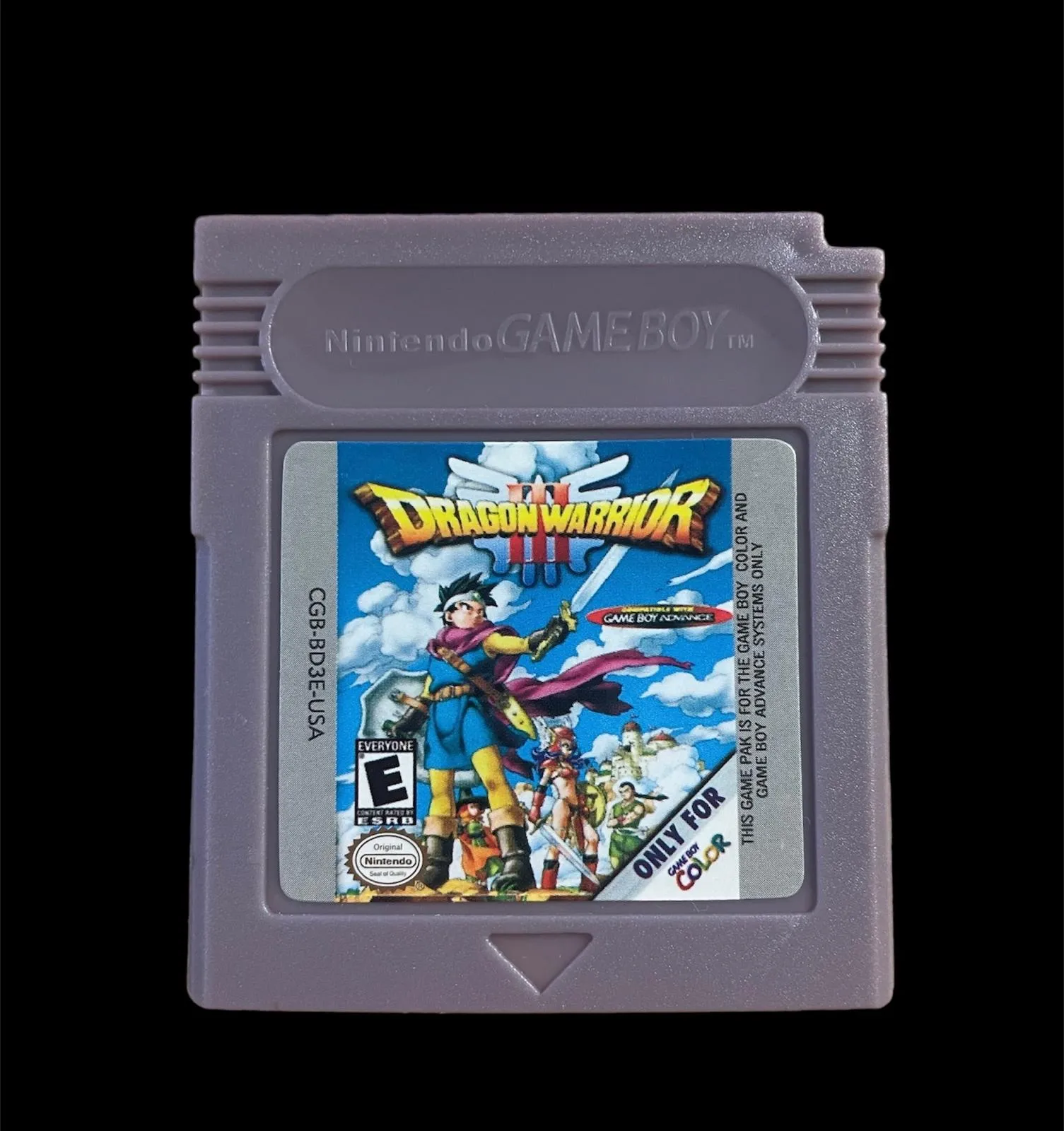
Dragon Warrior III for the Game Boy Color is a superbly crafted 2001 remake of one of the most important RPGs ever made. Originally released for the Famicom in 1988 as the third entry in Enix's Dragon Quest series, Dragon Warrior III holds the distinction of being the chronological prequel to the first two games in the series — it tells the story of the legendary hero Erdrick, whose deeds shaped the world that players explored in Dragon Warrior I and II. The GBC version is based on the acclaimed 1996 Super Famicom remake and brings its enhanced graphics, new features and expanded content to a portable format for the first time.
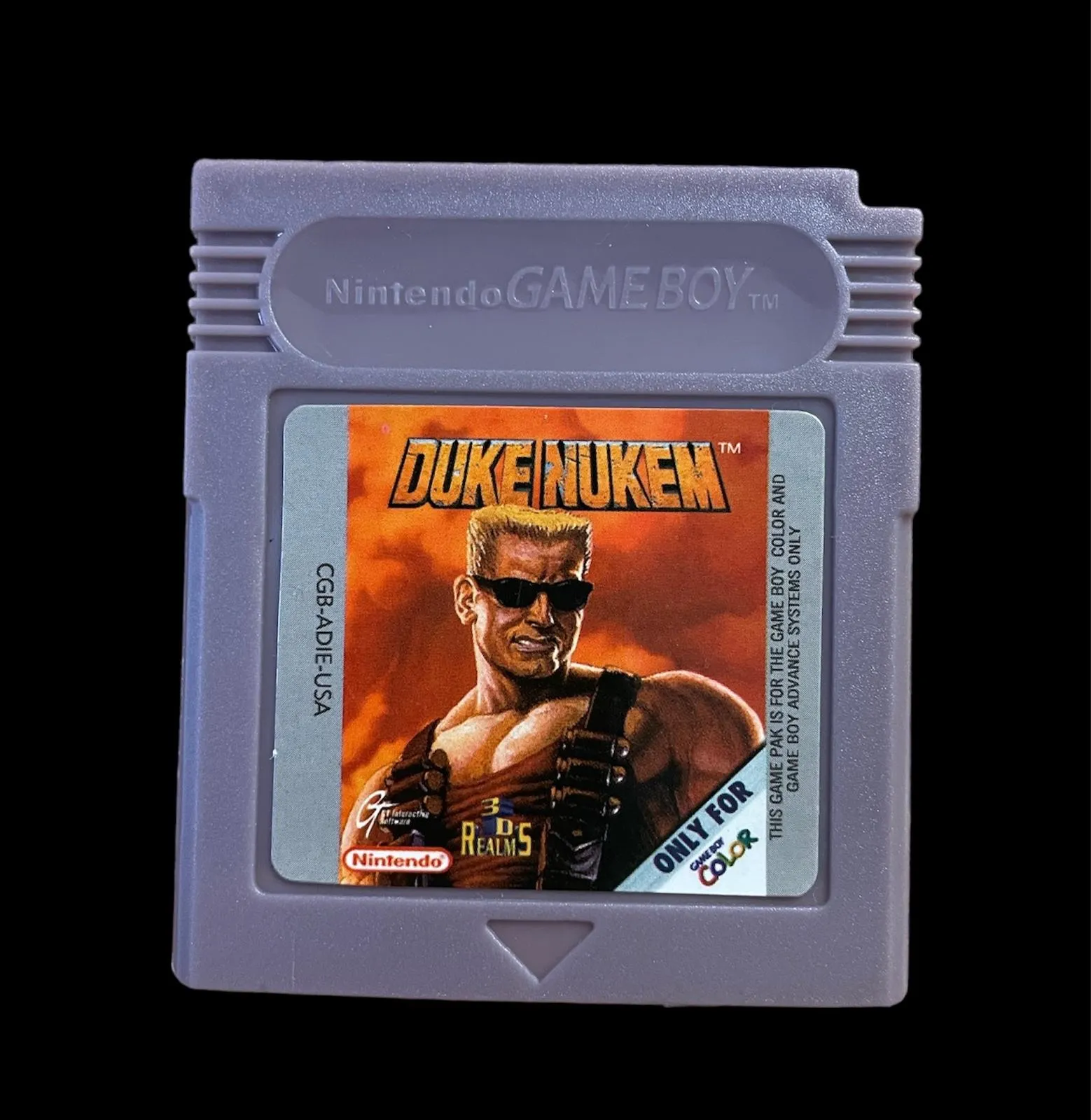
Duke Nukem on the Game Boy Color is a fascinating curiosity in the franchise's history, developed by Titus Interactive and released in 1999. Rather than attempting to shrink down the first-person shooter gameplay of Duke Nukem 3D onto the handheld, the developers made the smart decision to return the series to its 2D platformer roots, drawing inspiration from the original Duke Nukem and its 1993 DOS sequel Duke Nukem II. The result is a side-scrolling action game that follows Duke through a series of non-linear levels spread across multiple themed environments, including alien bases and outer space, as he battles extraterrestrial invaders with his trademark arsenal.
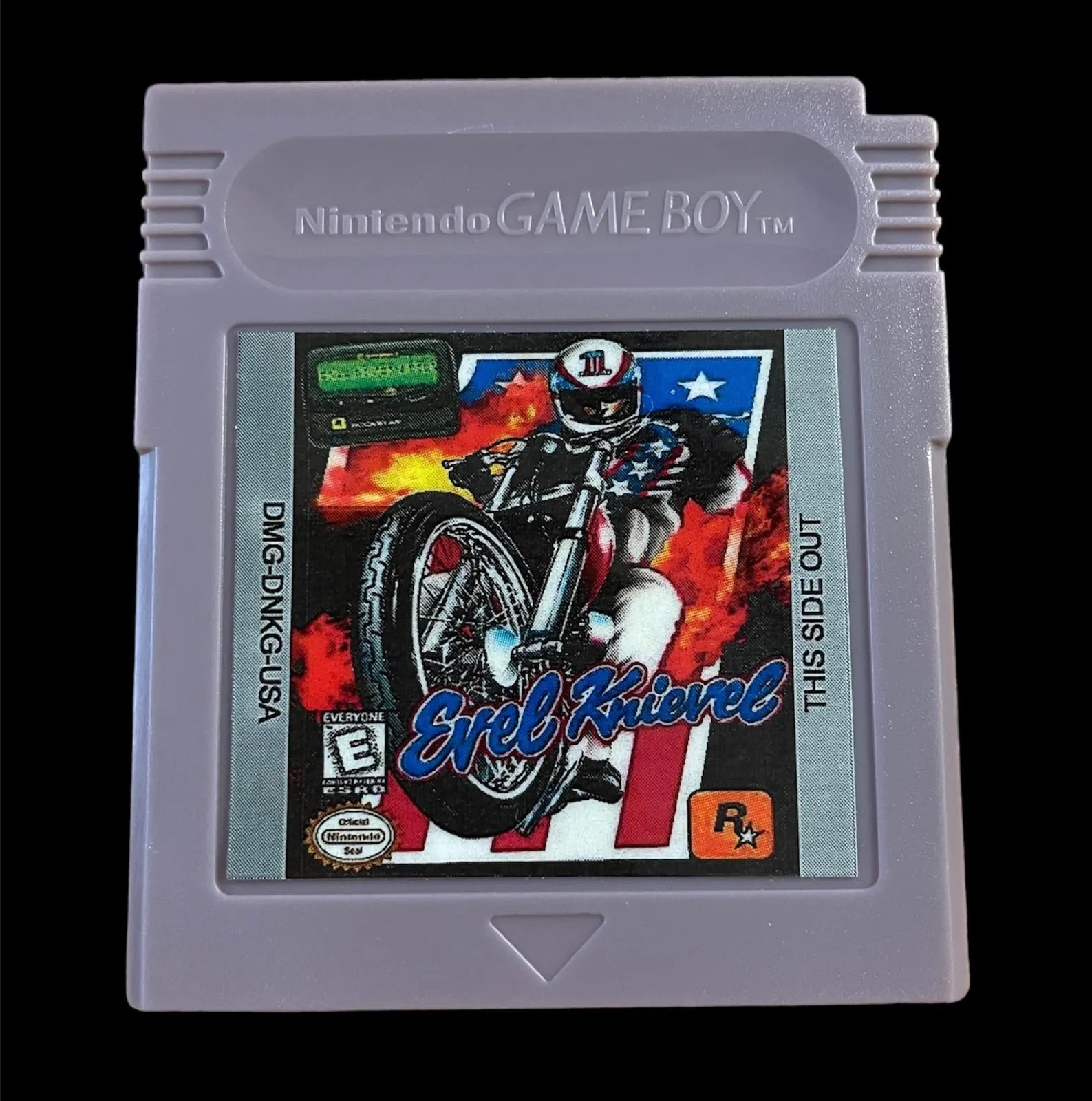
Evel Knievel for the Game Boy Color is a physics-based motorbike stunt game released in December 1999, developed by Tarantula Studios and published by Rockstar Games. It pays tribute to the legendary American daredevil and stunt performer who captivated the world throughout the 1970s with his death-defying motorcycle jumps over buses, fountains, and canyons. The game channels that spirit of spectacle and danger into 20 progressively challenging levels that demand precision, timing, and nerve.